
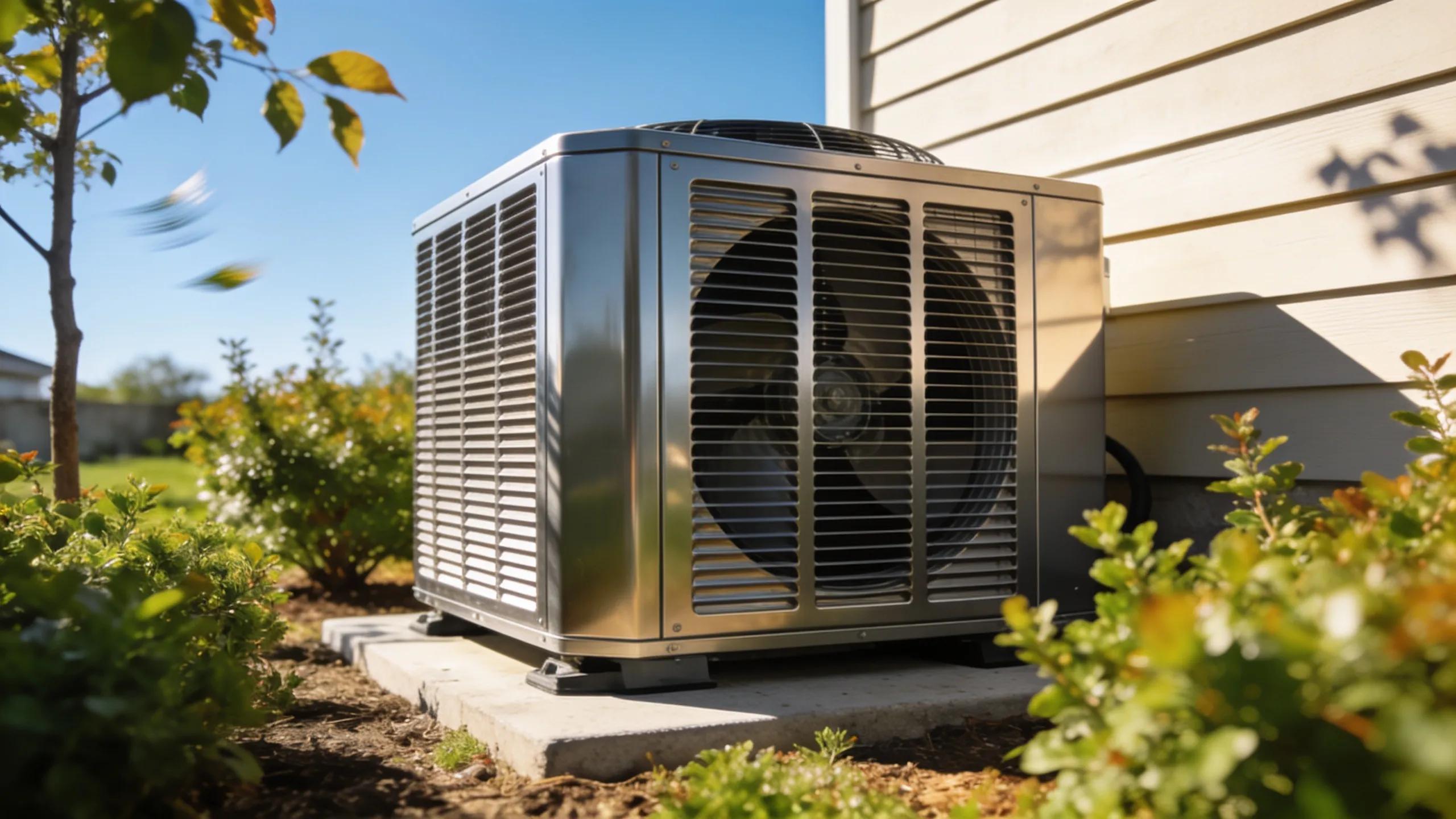
Outside AC Unit Won’t Turn On? Understanding Common Causes and Solutions
By Louie Paracuelles, Perfection Contracting, Inc.
When your outdoor AC won’t start, it’s stressful—especially in hot weather. From our experience, the problem usually comes down to electrical faults, failed parts, or a power supply issue. Knowing the likely causes helps you troubleshoot safely and decide whether to fix it yourself or call a pro.
This guide walks through the common reasons an outdoor AC won’t turn on. We explain electrical faults, mechanical failures, simple checks you can do, and maintenance steps that cut down on repeat problems.
- Outdoor AC units may fail to start due to thermostat, electrical, or mechanical issues.
- Tripped circuit breakers and power supply problems are common electrical causes for AC startup failure.
- A faulty capacitor can prevent the compressor and fan motor from starting the AC unit properly.
- Bad contactors disrupt electrical flow, stopping the AC unit from receiving power to operate.
- Mechanical failures like compressor or fan motor problems cause overheating and reduced cooling performance.
- Homeowners should inspect wiring, breakers, and thermostat settings when troubleshooting AC power issues.
- Resetting the circuit breaker and power cycling the unit can often restore AC functionality.
- Persistent or complex electrical and mechanical problems require professional HVAC technician assistance.
- Regular maintenance, including inspections and cleaning, helps prevent outdoor AC unit failures and extends lifespan.
Common causes for an outdoor AC unit not turning on include:
Several things can stop an outdoor AC from starting. From our experience, the usual suspects are thermostat errors, tripped breakers, bad wiring, failed start parts like capacitors or contactors, and worn mechanical parts like the compressor or fan motor.
- Thermostat Issues: A malfunctioning thermostat can prevent the AC unit from receiving the signal to turn on. Ensure that the thermostat is set to cooling mode and that the temperature setting is lower than the current room temperature.
- Tripped Circuit Breaker: If the circuit breaker has tripped, it will cut off power to the AC unit. Homeowners should check the breaker panel and reset any tripped breakers.
- Power Supply Problems: Issues with the power supply, such as loose wires or blown fuses, can also prevent the AC unit from starting. Inspecting the power supply connections is essential for troubleshooting.
- Faulty Capacitor: The capacitor is a critical component that helps start the AC unit. If it fails, the unit may not turn on at all.
- Bad Contactor: A malfunctioning contactor can disrupt the electrical flow to the AC unit, preventing it from starting.
- Mechanical Failures: Problems with the compressor or fan motor can also lead to startup issues. These components are essential for the unit’s operation.
Knowing these common causes gives you a clear starting point for simple checks and tells you when to stop and call a technician.
What Electrical Issues Cause an Outside AC Unit Not to Start?
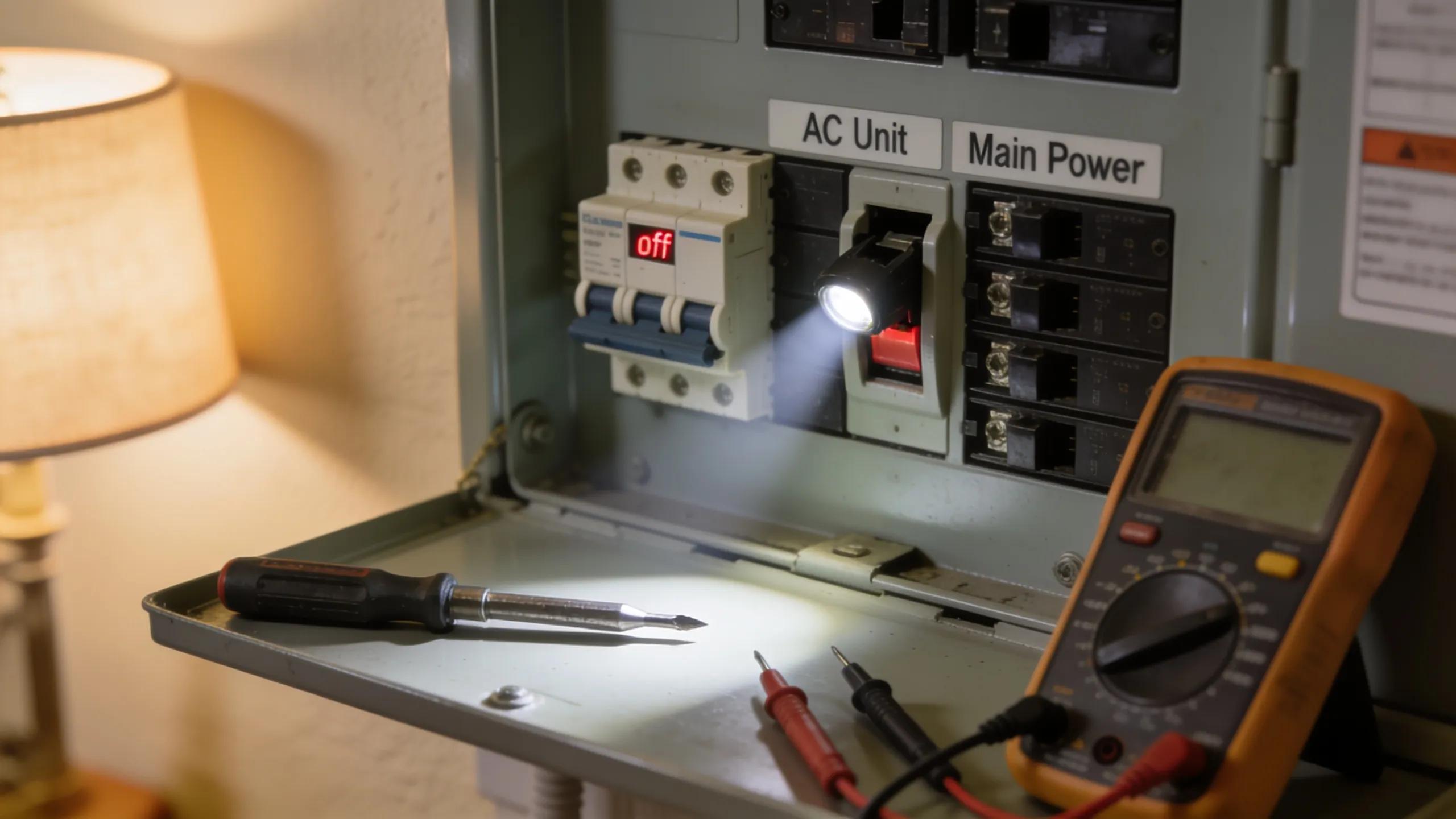
Electrical faults are often why an outdoor unit won’t start. From our experience, the things to check first are tripped breakers, the unit power switch, thermostat signals, visible wiring damage, and blown fuses.
- Tripped Circuit Breaker: A tripped breaker is one of the first things to check. If the breaker has tripped, it will need to be reset to restore power to the unit.
- Power Switch Turned Off: Sometimes, the power switch for the AC unit may be accidentally turned off. Ensure that the switch is in the “on” position.
- Thermostat Malfunction: If the thermostat is not functioning correctly, it may not send the signal to the AC unit to start. Checking the thermostat settings and functionality is crucial.
- Wiring Issues: Loose or damaged wiring can disrupt the electrical flow to the unit. Inspecting the wiring for any visible damage is essential.
- Blown Fuses: A blown fuse can also prevent the AC unit from receiving power. Replacing any blown fuses can resolve the issue.
Fix these simple electrical items first. Often a reset or tightening a connection gets the unit running again.
How Does a Faulty Capacitor Prevent AC Startup?
The capacitor gives the compressor and fan motor the extra jolt they need to start. When a capacitor goes bad, the unit may hum but not start, run on and off, or let the compressor overheat.
- Failure to Start: A faulty capacitor may prevent the AC unit from starting altogether. Homeowners may notice that the unit makes a humming sound but does not turn on.
- Intermittent Operation: In some cases, a failing capacitor may cause the unit to start and stop intermittently, leading to inconsistent cooling.
- Overheating: A malfunctioning capacitor can cause the compressor to overheat, potentially leading to further damage.
Replacing a capacitor usually fixes these symptoms. From our experience, have a qualified HVAC technician handle the replacement for safety and a correct diagnosis.
Can a Bad Contactor or Circuit Breaker Stop the AC Unit?
Yes. A bad contactor can fail to close and stop power to the compressor and fan. A circuit breaker that trips often or won’t stay on can also cut power and point to a deeper electrical fault.
- Bad Contactor: The contactor is responsible for controlling the electrical flow to the compressor and fan motor. If the contactor is faulty, it may not close properly, preventing the unit from receiving power. Symptoms of a bad contactor include a clicking sound when the thermostat is set to cool but no operation from the unit.
- Circuit Breaker Issues: A circuit breaker that frequently trips may indicate an underlying electrical problem. If the breaker is faulty, it may not provide a stable power supply to the AC unit, leading to startup failures.
Check for visible signs like burn marks or a stuck contactor. If you suspect either component, consider professional assistance to test and replace parts safely.
Which Mechanical Failures Lead to AC Condenser Not Turning On?
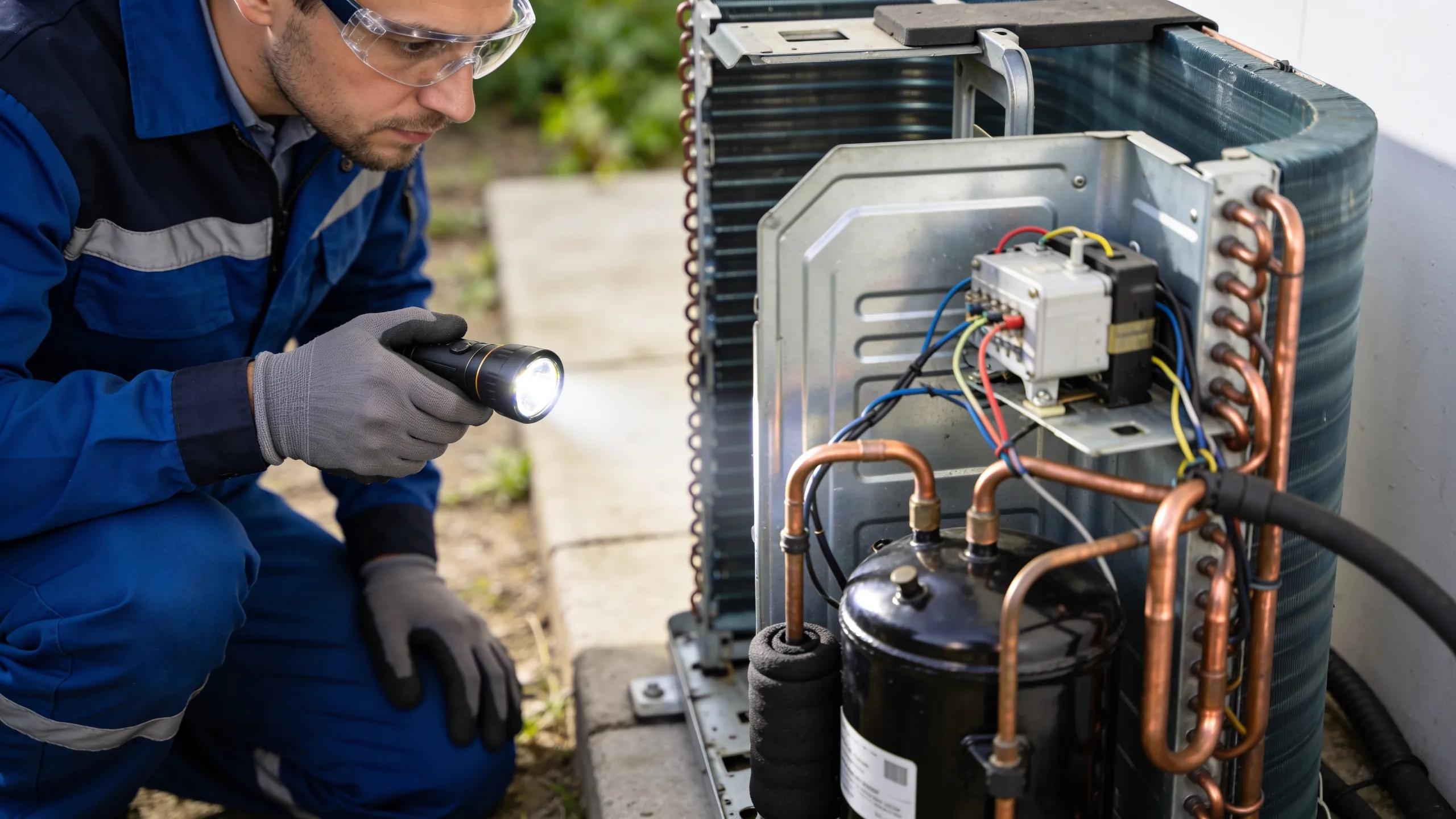
Mechanical problems also stop units from starting. Common issues include worn capacitors, a failed compressor, and corroded or loose electrical connections that interrupt power.
- Capacitor Failures: As previously mentioned, a faulty capacitor can prevent the unit from starting. This is a mechanical failure that requires replacement.
- Compressor Issues: The compressor is the heart of the AC system. If it fails, the unit will not operate. Signs of compressor failure include unusual noises or a lack of cooling.
- Electrical Connection Problems: Loose or corroded electrical connections can disrupt the power supply to the unit, leading to startup issues.
Spotting these failures early saves time and money. From our experience, a technician can confirm the cause and recommend the repair or replacement that gives long-term value.
Why Does a Compressor Failure Affect AC Operation?
The compressor moves refrigerant through the system. If it fails, the unit can’t cool, it will draw more power, and other parts can wear out faster.
- Loss of Cooling: If the compressor fails, the AC unit will not be able to cool the air effectively, leading to warm indoor temperatures.
- Increased Energy Consumption: A malfunctioning compressor may cause the unit to work harder, leading to increased energy consumption and higher utility bills.
- Potential Damage to Other Components: A failing compressor can cause strain on other components, potentially leading to further mechanical failures.
Watch for weak cooling, strange noises, or higher bills. These signs usually mean you should call a technician to avoid bigger costs later.
How Does a Fan Motor Problem Impact the Outside Unit?
The fan motor clears heat from the condenser. If it stops or runs poorly, the compressor can overheat and the unit will lose cooling power.
- Overheating: A malfunctioning fan motor can cause the compressor to overheat, leading to potential damage and system failure.
- Reduced Airflow: If the fan is not operating, the unit will struggle to circulate air, resulting in poor cooling performance.
- Increased Noise Levels: A failing fan motor may produce unusual noises, indicating that it is not operating smoothly.
Listen for odd sounds and check that the fan spins freely with the power off. If you see issues, schedule a repair so the problem doesn’t worsen.
What Power Supply Problems Should Homeowners Check First?
Start with the simple power checks. Look for tripped breakers, loose wires, and corrosion at connections. These items often stop units from starting and are easy to inspect.
- Tripped Breakers: Check the circuit breaker panel for any tripped breakers and reset them if necessary.
- Loose Wires: Inspect the power supply connections for any loose or damaged wires that may disrupt the electrical flow.
- Corrosion: Look for signs of corrosion on electrical connections, which can impede the power supply.
Fixing a loose wire or clearing corrosion can often restore power. If the issue repeats, get a technician to find the root cause.
How to Identify Breaker Trips and Wiring Issues?
To spot breaker or wiring problems, check the breaker panel, look for loose or damaged wires, and inspect any fuses the unit uses. These checks help narrow down the fault.
- Inspect the Circuit Breaker: Check the circuit breaker panel for any tripped breakers. If a breaker has tripped, reset it and monitor the unit’s performance.
- Examine Wiring Connections: Inspect the wiring connections for any visible damage or loose connections. Tightening loose wires can help restore power.
- Check for Blown Fuses: If the unit has fuses, check for any blown fuses and replace them as needed.
Keep records of repeated trips or visible damage. That information helps a technician diagnose and fix the deeper issue faster.
What Role Does the Thermostat Play in AC Startup?
The thermostat tells the system when to cool. If it’s set wrong or not sending a proper signal, the outdoor unit won’t start even if the unit itself is fine.
- Temperature Regulation: The thermostat monitors the indoor temperature and determines when to activate the AC unit based on the set temperature.
- Signal Transmission: When the indoor temperature exceeds the set point, the thermostat sends a signal to the AC unit to start cooling.
- Malfunction Consequences: If the thermostat is malfunctioning, it may fail to send the correct signals, preventing the AC unit from starting.
Check the mode and setpoint first. If the thermostat looks faulty, swap to a spare thermostat or call a tech to test the control signal.
How Can Homeowners Safely Troubleshoot Outside AC Unit Power Issues?
Work safe and keep it simple. Turn off power at the breaker before touching anything. Only do visual checks, breaker resets, and basic wiring inspections if you’re comfortable and know what you’re doing.
- Turn Off Power: Before inspecting any electrical components, ensure that the power to the AC unit is turned off to prevent electrical shock.
- Check the Circuit Breaker: Inspect the circuit breaker panel for any tripped breakers and reset them if necessary.
- Inspect Wiring Connections: Look for any loose or damaged wiring connections and tighten or repair them as needed.
- Consult a Professional: If homeowners are unsure about any electrical issues, it is advisable to consult a professional HVAC technician for assistance. For more information on how to keep your AC system running smoothly, consider exploring different air conditioning service options.
What Are the Basic Steps to Reset or Test the Unit?
To reset the unit, cut power at the breaker, wait 5–10 minutes, then power it back on and test the thermostat. This simple power cycle can clear minor electronic faults.
- Turn Off the Power: Begin by turning off the power to the AC unit at the circuit breaker.
- Wait for a Few Minutes: Allow the unit to sit without power for about 5-10 minutes to reset the system.
- Turn the Power Back On: After waiting, turn the power back on at the circuit breaker.
- Test the Thermostat: Set the thermostat to a lower temperature to see if the unit starts cooling.
If the unit still won’t start, note any sounds or lights and share those details with a technician to speed up diagnosis.
When Is It Time to Call a Professional HVAC Technician?
Call a pro when problems persist, involve electrical work, or show mechanical failure signs. From our experience, delaying repairs often raises the repair cost later.
- Persistent Issues: If the AC unit continues to have problems after troubleshooting, it may indicate a more serious underlying issue.
- Electrical Concerns: If homeowners are uncomfortable working with electrical components or suspect electrical issues, it is best to consult a professional.
- Mechanical Failures: If there are signs of mechanical failures, such as unusual noises or overheating, a technician should be called to assess the situation.
- Regular Maintenance: Scheduling regular maintenance with a professional can help prevent future issues and ensure the AC unit operates efficiently.
If you hear grinding, see burn marks, or the unit keeps tripping breakers, stop and call a licensed HVAC technician.
What Preventive Maintenance Tips Help Avoid Outside AC Unit Failures?
Routine care prevents many breakdowns. From our experience, regular inspections, clean filters, checking refrigerant, and keeping the area clear of debris protect the unit and save money over time.
- Regular Inspections: Schedule regular inspections to identify potential issues before they become major problems.
- Clean Filters: Regularly clean or replace air filters to ensure proper airflow and efficiency.
- Check Refrigerant Levels: Ensure that refrigerant levels are adequate to maintain optimal cooling performance.
- Clear Debris: Keep the area around the outdoor unit clear of debris and vegetation to ensure proper airflow.
Simple seasonal checks cut down on emergency repairs and help your unit reach its expected lifespan.
How Regular AC Maintenance Extends Unit Life and Reliability?
Keeping up with maintenance boosts reliability. Inspections catch small faults early, and routine cleaning keeps the system running without extra strain.
- Improved Efficiency: Regular maintenance helps ensure that the unit operates efficiently, reducing energy consumption and lowering utility bills.
- Early Problem Detection: Routine inspections can identify potential issues early, allowing for timely repairs and preventing costly breakdowns.
- Extended Lifespan: Proper maintenance can extend the lifespan of the AC unit, saving homeowners money on premature replacements.
- Enhanced Comfort: A well-maintained AC unit provides consistent cooling, ensuring a comfortable indoor environment.
Routine service keeps repair costs lower and helps the system run smoothly for years.
What Signs Indicate Early Electrical or Mechanical Problems?
Watch for odd noises, weak or uneven cooling, higher energy bills, or strange smells. These are early warning signs that need attention before they turn into big failures.
- Unusual Noises: Hearing strange sounds, such as grinding or squealing, may indicate mechanical issues that require attention.
- Inconsistent Cooling: If the unit is not cooling effectively or is cycling on and off frequently, it may signal underlying problems.
- Increased Energy Bills: A sudden spike in energy bills without a change in usage may indicate that the AC unit is working harder than it should.
- Foul Odors: Unpleasant smells coming from the unit may indicate electrical issues or mold growth.
Catching these signs early makes repairs easier and cheaper. If you spot them, schedule an inspection.
Frequently Asked Questions
What should I check if my outdoor AC unit doesn’t turn on after a storm?
After a storm, look for visible damage like bent fan blades or debris blocking airflow. Check the circuit breaker for trips and inspect for signs of water or burned wiring. If the unit still won’t start, have a technician check the electrical components and internal wiring.
Why does my outdoor AC unit make a clicking sound but doesn’t start?
A clicking sound usually points to an electrical starter issue, such as a bad contactor or weak capacitor. The unit may try to start but fail. From our experience, have a qualified HVAC technician test those parts rather than guessing, since testing requires safe handling of live circuits.
How can I determine if my AC unit’s fan is the problem?
Turn off power and look to see if the fan blades turn freely. When powered on, listen for the fan and watch for movement. No spin or strange vibration often means the fan motor or start capacitor is faulty. If you’re not sure, call a technician to test and repair it.
Can regular cleaning prevent my AC from failing?
Yes. Dust and debris build up on coils and filters, which makes the unit work harder and can cause failures. Clean or replace filters regularly and keep the area around the unit clear. These steps reduce breakdowns and help the system last longer.
What is the average lifespan of an outdoor AC unit?
Most outdoor AC units last about 12 to 15 years. Proper maintenance can extend that life. If your unit is around 10 years old and needs frequent repairs or loses efficiency, plan for replacement to avoid sudden failures.
What steps should I take if my AC unit keeps tripping the circuit breaker?
First, turn off the unit. Check the breaker for repeated trips and look for loose wires or damaged insulation. If the breaker still trips after a reset, stop using the unit and call an electrician or HVAC technician to find the root cause safely.
Conclusion
Knowing the likely causes of a unit that won’t start helps you act quickly and wisely. Do the simple checks first, keep up with maintenance, and call a licensed HVAC technician for electrical or complex mechanical problems. That approach saves money and keeps your system reliable over time.
Related Services
- Cooling Services
- Air Conditioning Repair
- Air Conditioning Installation
- Air Conditioning Maintenance Service
Keep Reading
- AC Running but Not Cooling? Common NJ Causes
- What Is a SEER Rating and Why It Affects Your Energy Bills
Browse all HVAC tips and guides.
Need a technician? Perfection Contracting serves homeowners across Sussex County, NJ and the surrounding North Jersey service area.