Furnace Not Turning On? 9 Things to Check Before You Call for Repair (NJ Homeowner’s Guide)
It’s 6 a.m. on a November morning. You walk downstairs and the house is cold. You nudge the thermostat up. Nothing.
Before you picture a four-figure repair bill, take a breath.
We’ve answered a lot of no-heat calls across Morris and Sussex County. A good share of them come down to something small: a switch somebody bumped, a dead thermostat battery, a filter nobody has looked at since spring. Those are fixes you can make yourself in a few minutes.
Others are not DIY. And we’d rather you know the difference before you start poking around.
So here’s the plan. We’ll walk you through the nine things we check first, in the order we check them. Then we’ll show you exactly when to stop and pick up the phone.
Let’s get your heat back on.
First, a 30-Second Safety Check
Before you touch a single switch, do two things.
Smell the air near the furnace. Natural gas has no odor on its own, so utilities add a rotten-egg scent to it. If you smell that, don’t flip anything on or off. Leave the house and call your gas company from outside.
Glance at your carbon monoxide detector. If it’s alarming, or anyone in the house has a headache or nausea that eases when they step outside, get everyone out and call 911.
Why start here? Because the numbers aren’t small. Provisional CDC data shows 1,244 Americans died from carbon monoxide poisoning in 2022, 624 of them accidentally, the highest accidental total since at least 1999. And the Consumer Product Safety Commission ties roughly 28% of consumer-product CO deaths to heating systems.
No gas smell, no alarm? Good. You’re clear to troubleshoot.
The 9 Things to Check (In This Order)
We’ve put these in the order that solves the most problems fastest. Start at the top.
1. Is the thermostat actually asking for heat?
It sounds obvious, but it catches people every year.
Make sure the mode is set to Heat, not Cool or Off. Then set the temperature at least five degrees above the current room reading. Now wait. Many furnaces have a built-in delay of a few minutes before they start.
If the screen is blank or faded, replace the batteries. Even plenty of hardwired models rely on backup batteries.
Thermostats get their own full guide, so we’ll keep it short here. If you suspect yours is the problem, read our post on telling a thermostat problem from a furnace problem.
2. Find the furnace power switch
Look for something that looks like a plain light switch. It’s usually mounted on the side of the furnace, on the wall beside it, or on a floor joist above it.
It almost never has a label. That’s exactly why people flip it off while reaching for a light. Make sure it’s on.
3. Check the breaker panel
Your furnace burns gas or oil, but it needs electricity to run the blower, the control board, and the ignition. Find the breaker marked “Furnace” or “HVAC.” If it’s tripped, push it all the way off, then back on.
If it trips again, stop. Don’t keep resetting it. A breaker that won’t hold means something is pulling too much current, and that’s an electrical fault, not a nuisance. Call us.
4. Make sure the access panel is fully seated
Every furnace has a small door switch that cuts power when the front panel comes off. It’s a safety feature, and it works a little too well.
If the panel is even half an inch out of place after a filter change, the furnace plays dead. Push it in until it sits flush or clicks.
5. Pull the air filter
A clogged filter starves the furnace of airflow. The heat exchanger overheats, a safety called the high-limit switch trips, and the furnace shuts itself down to prevent damage.
Hold the filter up to a light. If you can’t see light through it, replace it. In our area, most homes need a new filter every one to three months during heating season, and sooner with pets.
Not sure what to buy? We covered filter sizes and MERV ratings in How Often Should You Change Your Furnace Filter?
6. Open your vents and clear the returns
Walk the house. Are several supply registers closed? Is a couch or a bookshelf pushed over a return grille?
Closing vents doesn’t save energy. It raises the pressure in your ducts, which raises the temperature inside the furnace, which can trip that same limit switch. Open them up.
7. Check the gas valve
Follow the gas pipe to the furnace. You’ll find a valve with a lever handle. Parallel to the pipe means open. Crosswise means closed.
If you know it was closed by accident, say, during a recent water heater swap, turn it parallel. If you don’t know why it’s closed, leave it alone and call us.
Quick cross-check: is your gas stove or water heater working? If they’re down too, the problem is your gas supply, not your furnace. Call the utility.
8. Look for water around the base (high-efficiency furnaces)
Does your furnace vent through white PVC pipe instead of a metal flue? Then it produces condensation, and that water has to drain somewhere.
When the drain line clogs, a float switch trips and the furnace refuses to start. Look for water pooling at the base or in the drain pan. If you find it, clear the line if you can reach it, or call us and we’ll flush it.
9. Do one reset, then read the light
Turn the furnace power switch off. Wait 30 seconds. Turn it back on and watch the small window on the front panel.
A steady light usually means normal operation. A blinking pattern is a fault code. Count the flashes, write them down, and match them to the legend printed inside the access panel. Give us that code when you call. It can shave real time off the diagnosis.
One reset only. Modern furnaces lock themselves out after a few failed ignition attempts on purpose, so unburned gas can’t build up. Resetting over and over defeats that protection.
Older furnace with a standing pilot light? Follow the relighting steps printed on the unit. If the pilot won’t stay lit, the thermocouple is probably worn out. That’s a quick fix for a tech.
5 Signs to Stop Troubleshooting and Call Now
Some symptoms mean the DIY portion of the morning is over:
- Any gas smell. Leave first, call second.
- A CO alarm or CO symptoms. Same.
- A breaker that trips a second time.
- A burning electrical or plastic smell. That’s different from the dusty smell on the first cold day, which we explained in Why Does My Furnace Smell Like Burning?
- A loud bang or boom at startup, or scorch marks around the burner area.
Here’s why we don’t want you pushing past these. From 2020 through 2024, U.S. fire departments responded to an average of 37,365 home heating equipment fires a year, causing 417 civilian deaths and more than $1.2 billion in property damage, according to the National Fire Protection Association. Central heating systems account for roughly one in ten of those fires. The ones we’ve seen almost always trace back to a warning sign that got ignored.
What Happens When We Come Out
Here’s what to expect when a Perfection Contracting technician arrives.
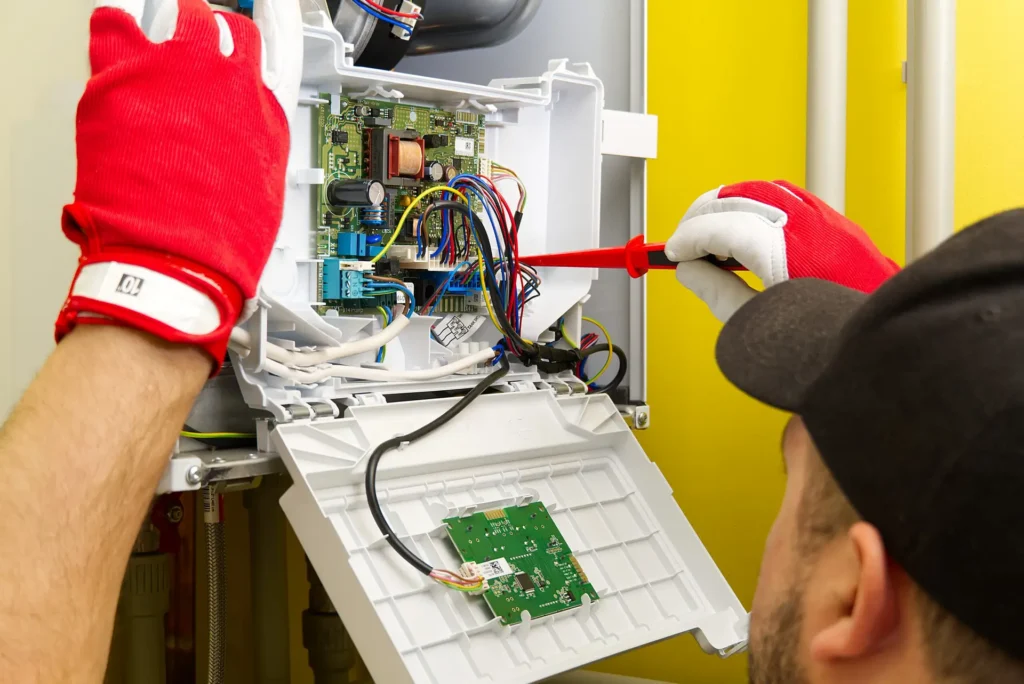
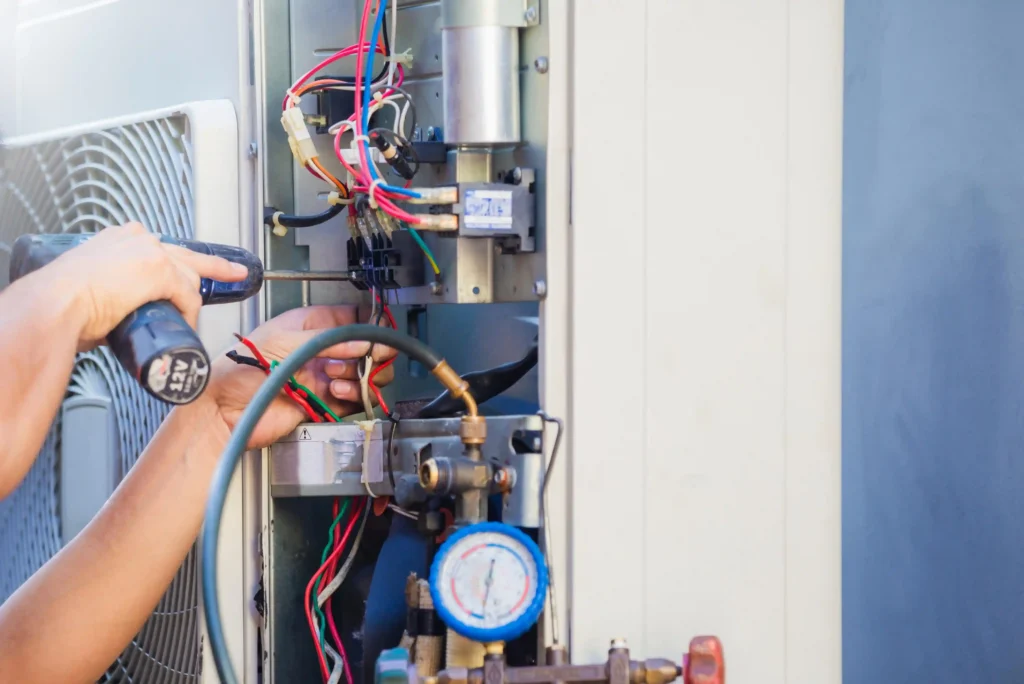
We pull the fault code from the control board first. Then we test the usual suspects in sequence: the ignitor, the flame sensor, the pressure switch, the gas valve, and the board itself. We also inspect the heat exchanger, because a crack there is a safety issue, not just a repair.
Most no-heat calls are not catastrophic. Nationally, HomeAdvisor puts typical furnace repair between $133 and $505, with an average around $318 in 2026. An ignitor replacement, one of the most common fixes, generally runs $150 to $300. Expect a diagnostic or service-call fee somewhere in the $75 to $200 range, which many contractors apply toward the repair. Your actual cost depends on the part, your furnace model, and whether the call is after hours.
How to Avoid the Next No-Heat Morning
A furnace rarely fails without warning. It usually tells you first.
- Book a tune-up every fall. We catch weak ignitors, dirty flame sensors, and cracked exchangers before they strand you. Here’s what a furnace tune-up actually includes.
- Change the filter on a schedule. Put a reminder on your phone.
- Put a CO detector on every level and outside sleeping areas. Test monthly. Replace by the date printed on the back.
- Keep three feet of clearance around the furnace. No boxes, no paint cans, no laundry.
- Know your furnace’s age. Most last 15 to 20 years. Past that, every repair is worth weighing against replacement.
Frequently Asked Questions
How many times can I reset my furnace?
Once. If it locks out again after a single reset, it is protecting you from a real fault, usually ignition or a safety switch. Write down the flash code and call for service.
Why does my furnace click but not turn on?
A click with no ignition usually means the control board is trying to start the sequence but a component downstream is failing: a weak ignitor, a stuck pressure switch, or a gas valve that is not opening. That is a technician repair.
Is a furnace not turning on an emergency?
It is if you smell gas, a CO alarm sounds, or outdoor temperatures are low enough to put pipes at risk. Otherwise it is urgent but safe to run the nine checks above before calling.
When Your Furnace Won’t Start, Perfection Contracting Will
Nine checks. Most take two minutes. If one of them gets your heat back, that’s a win, and we’re glad you didn’t need us today.
If you’ve worked the list and the house is still cold, or you hit one of the five stop signs, call Perfection Contracting. Our licensed technicians serve Sussex County, Morris County and the surrounding North Jersey towns, and our 24/7 heating repair team answers the phone on the cold nights, not just during business hours. Call 973-579-0182.
Tell us your fault code. We’ll bring the right part.