Cracked Heat Exchanger: Warning Signs, Carbon Monoxide Risk, and Whether It Means a New Furnace
Few furnace problems cause as much worry as hearing the words “cracked heat exchanger.”
That worry is understandable. The heat exchanger is the part of a gas or oil furnace that keeps combustion gases, including carbon monoxide, separate from the air that circulates through your home. When it cracks, that separation can fail.
Here are the warning signs of a cracked heat exchanger, what it means for carbon monoxide safety, and whether it means you need a new furnace.
What Is a Heat Exchanger?
Inside a furnace, burners heat a set of metal chambers or tubes called the heat exchanger. Air from your home passes over the outside of the heat exchanger and gets warm, while combustion gases stay inside and are vented outdoors.
Over years of heating and cooling, the metal expands and contracts. Eventually that stress, along with corrosion or overheating, can cause cracks or holes.
What Causes a Heat Exchanger to Crack?
- Age and years of thermal stress
- Overheating from restricted airflow, often a dirty filter or blocked returns
- An oversized furnace that short cycles
- Corrosion from condensation or poor venting
- Manufacturing defects in some cases
This is one reason changing your filter matters. See our guide on how often to change your furnace filter.
Signs of a Cracked Heat Exchanger
Some signs can only be found by a technician during an inspection. Others homeowners may notice:
- Carbon monoxide alarm sounding
- Soot around the furnace, burners or registers
- Changes in the flame, such as a flickering, lazy or yellow flame instead of a steady blue one
- Flames rolling out of the burner area
- Corrosion or visible cracks on the heat exchanger surface
- Unusual odors when the furnace runs
- Water or rust inside the furnace cabinet
- The furnace shutting down on safety controls
A technician may use visual inspection, cameras, combustion analysis and other tests to confirm a crack.
Why a Cracked Heat Exchanger Is a Carbon Monoxide Risk
Carbon monoxide is colorless and odorless. Exposure can cause symptoms that are easy to mistake for the flu, including:
- Headache
- Dizziness
- Weakness
- Nausea or vomiting
- Confusion
- Shortness of breath
The CDC notes that CO poisoning can cause loss of consciousness and death, and that people who are sleeping can be poisoned before they experience symptoms.
If your CO alarm goes off or anyone has symptoms, get everyone outside to fresh air immediately and call 911 or your gas utility.
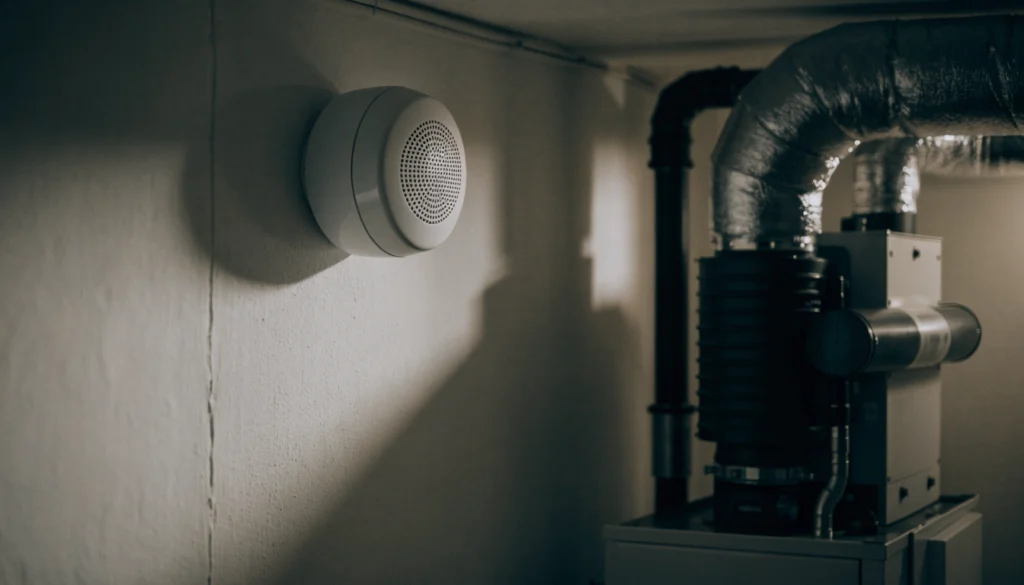
Where to Place Carbon Monoxide Detectors
- On every level of the home, including the basement
- Outside each sleeping area
- Following the manufacturer’s height and placement instructions
- Away from the furnace itself so normal startup does not cause nuisance alarms
Test detectors monthly and replace them by the expiration date. Our post on furnace safety and carbon monoxide covers more safety tips.
What Does It Mean When a Furnace Is Red-Tagged?
If a technician finds a cracked heat exchanger or another dangerous condition, they may shut the furnace off and tag it as unsafe to operate. This is often called a red tag.
It means the furnace should not be used until the problem is repaired or the furnace is replaced. Running a red-tagged furnace puts your household at risk.
Repair or Replace?
In some cases, a heat exchanger can be replaced. But it is one of the most labor-intensive repairs on a furnace, and the part is often a large share of the cost of a new unit.
| Situation | Usually Makes Sense |
|---|---|
| Newer furnace still under parts warranty | Ask about heat exchanger replacement |
| Furnace over 15 years old | Replacement often makes more sense |
| Multiple other problems | Replacement |
| Poor efficiency and high bills | Replacement |
If replacement is the right call, our furnace installation team can help you choose a properly sized, efficient system.
How to Help Prevent Heat Exchanger Problems
- Change the air filter regularly
- Keep supply and return vents open
- Schedule an annual heating tune-up, which includes heat exchanger inspection
- Have the furnace properly sized when it is replaced
- Keep venting clear and in good condition
Frequently Asked Questions
Can you run a furnace with a cracked heat exchanger?
It is not recommended. A cracked heat exchanger can allow carbon monoxide into your home.
How do I know if my heat exchanger is cracked?
A technician has to confirm it. Warning signs include CO alarms, soot, flame changes and corrosion.
Does a cracked heat exchanger always leak carbon monoxide?
Not always, but it creates the risk. Because CO is odorless, it should be treated as a safety issue.
Is a cracked heat exchanger covered by warranty?
Many manufacturers offer longer warranties on heat exchangers, but labor may not be covered. Check your warranty paperwork.
Concerned About Your Furnace?
If you suspect a problem, do not wait. Perfection Contracting offers 24/7 heating repair across Sussex County and North Jersey. Call 973-579-0182.
Related Services
- Furnace Repair Service
- Furnace Installation
- Heating Services
- Heating Repair
- Heating Installation & Replacement
Keep Reading
- Oil Furnace and Oil Boiler Maintenance: What an Annual Service Includes (and When Converting Makes More Sense)
- The Complete Homeowner’s Guide to Heat Pump Wiring & Maintenance for Homeowners
Browse all HVAC tips and guides.
Need a technician? Perfection Contracting serves homeowners across Sussex County, NJ and the surrounding North Jersey service area.