
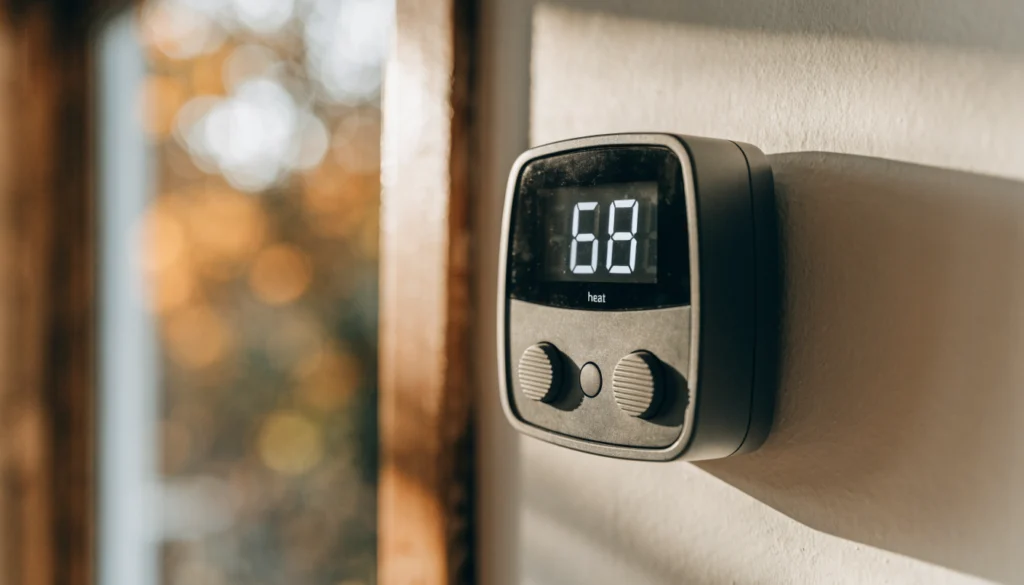
Thermostat Not Working? How to Tell If It’s the Thermostat or the Furnace
Your thermostat says “Heat On.” The house says otherwise.
Or maybe the screen is just blank. Either way, you’re standing in a cold hallway trying to figure out which thing broke: the little box on the wall or the big box in the basement.
Here’s the good news. You can usually tell in about five minutes, with no tools. And the answer matters, because it decides whether you’re looking at a pack of batteries, a new thermostat, or a furnace repair call.
We help homeowners across Morris and Sussex County sort this out every week. Here’s how we do it.
Start Here: What Is the Screen Doing?
Your thermostat’s display is your first clue. Find your situation below.
Blank or dead screen. No power is reaching the thermostat. That’s a power problem, and it can come from two places. More on this in a moment, because it fools a lot of people.
Screen works, says “Heat On,” but no warm air. The thermostat is doing its job. It’s calling for heat. The furnace isn’t answering. That almost always points to the furnace.
Screen works, but it never says “Heat On.” The thermostat isn’t sending the call. Think settings, batteries, or the thermostat itself.
Screen shows a temperature that’s clearly wrong. The sensor or its location is the problem, not the furnace.
“Offline” or no Wi-Fi. That’s your network, not your heat. Most smart thermostats keep running their schedule even when the app can’t reach them.
Found your category? Let’s dig in.
The Blank Screen Trap
Most people see a dead thermostat and assume the thermostat died. Sometimes it did. But plenty of “dead” thermostats are perfectly healthy. They’re just not being fed.
Here’s why. A hardwired thermostat gets its power from a small 24-volt transformer inside your furnace. If the furnace loses power, the thermostat goes dark too. Even battery-free smart thermostats depend on that connection (the “C” wire).
So before you order a new thermostat, run these checks:
- Swap the batteries if it uses them. Yes, even if you changed them last month.
- Check the furnace power switch and breaker. If the furnace is off, the thermostat is off.
- Look for water under the furnace. High-efficiency furnaces have a float switch in the condensate drain. When it trips, it cuts the 24-volt circuit, and your thermostat screen goes blank. A puddle is the giveaway.
- Suspect the control board fuse. Many furnace boards carry a small 3-amp fuse. A loose thermostat wire touching metal blows it instantly. This is a quick fix for a technician, and not one we recommend homeowners dig into.
If the furnace clearly has power and the thermostat is still dark, now the thermostat is the suspect.
“Heat On” but No Heat? It’s Probably the Furnace
When the display says it’s calling for heat, your thermostat has closed the circuit. The furnace should start within a few minutes.
Walk downstairs and listen. A healthy furnace runs a sequence: a click, the inducer fan humming, the igniter glowing, burners lighting, then the blower kicking on about a minute later.
Hear silence? Or does it start and stop partway? Then the thermostat isn’t your problem. Work through our nine-step furnace not turning on checklist. Filter, door switch, gas valve, fault codes, all of it.
One exception. If the screen says “Heat On” but you hear no soft click at the wall when you raise the temperature, the relay inside the thermostat may have failed. That’s rare on new units and common on 15-year-old ones.
The Thermostat Never Calls for Heat
The screen is on. You raise the temperature. Nothing. No “Heat On,” no click.
Check these in order:
- Mode. Set to Heat, not Cool, Off, or Auto.
- Set point. At least five degrees above the room reading.
- Schedule or hold. A programmed schedule may be overriding you. Set a temporary hold and see if it responds.
- Batteries. Weak batteries can light the screen but not trip the relay. Replace them.
- Reset. Pull the thermostat off its wall plate for 30 seconds, or use the reset option in the menu.
- Wiring. Turn off the furnace power switch first. Lift the thermostat off its base. Find the R and W wires. Each should sit firmly under its terminal with no bare copper touching a neighbor and no green corrosion. Seat anything loose and snug the screw.
If the wiring looks clean and it still won’t call for heat, the thermostat has most likely failed.
The Reading Is Wrong
If the thermostat reads 72°F and a cheap thermometer next to it reads 65°F, your furnace is doing exactly what it’s told. The problem is the information.
The usual causes:
- Location. Afternoon sun through a window, a lamp underneath, a drafty exterior wall, or a spot right next to a supply register.
- Dust. A dusty sensor reads slow and wrong. Pop the cover and dust gently.
- A drifting sensor. Older units lose accuracy. Replacing the thermostat is cheaper than fighting it.
Relocating a thermostat means running new wire. We do it routinely as part of a Wi-Fi thermostat install.
Wi-Fi Thermostat Offline?
Breathe. Offline rarely means cold.
Smart thermostats store the schedule on the device, so they keep heating when the app loses touch. “Offline” usually means the router rebooted, the Wi-Fi password changed, or the thermostat lost power and didn’t reconnect.
Reboot the router. Confirm the thermostat has power. Rejoin the network from the thermostat’s own menu.
If it drops offline every day, two things are likely. The signal is weak at that wall, or the thermostat has no C wire and is browning out when it tries to transmit. A C-wire adapter solves the second one for good.
When It’s Time to Replace the Thermostat
Thermostats don’t last forever. If yours is more than 10 years old, has a mercury bulb inside, or uses a slide lever instead of a screen, replacement is usually the smarter spend.
It also pays for itself faster than most upgrades. According to ENERGY STAR, the average household with a certified smart thermostat saves more than 8% on heating and cooling energy, about $50 a year. And the U.S. Department of Energy says setting the thermostat back 7 to 10 degrees for eight hours a day can cut annual heating and cooling costs by as much as 10%. The DOE’s suggested winter setting when you’re home and awake is 68°F.
A good Wi-Fi thermostat does that setback automatically, then warms the house before you wake up. If you’re weighing options, our team installs and configures Wi-Fi thermostats that work with your existing furnace or heat pump.
One caution for North Jersey homes. When you set back at night or while traveling, don’t drop below about 55°F. Pipes in exterior walls and crawl spaces freeze faster than people expect.
Still Stuck? Here’s How We Settle It in Two Minutes
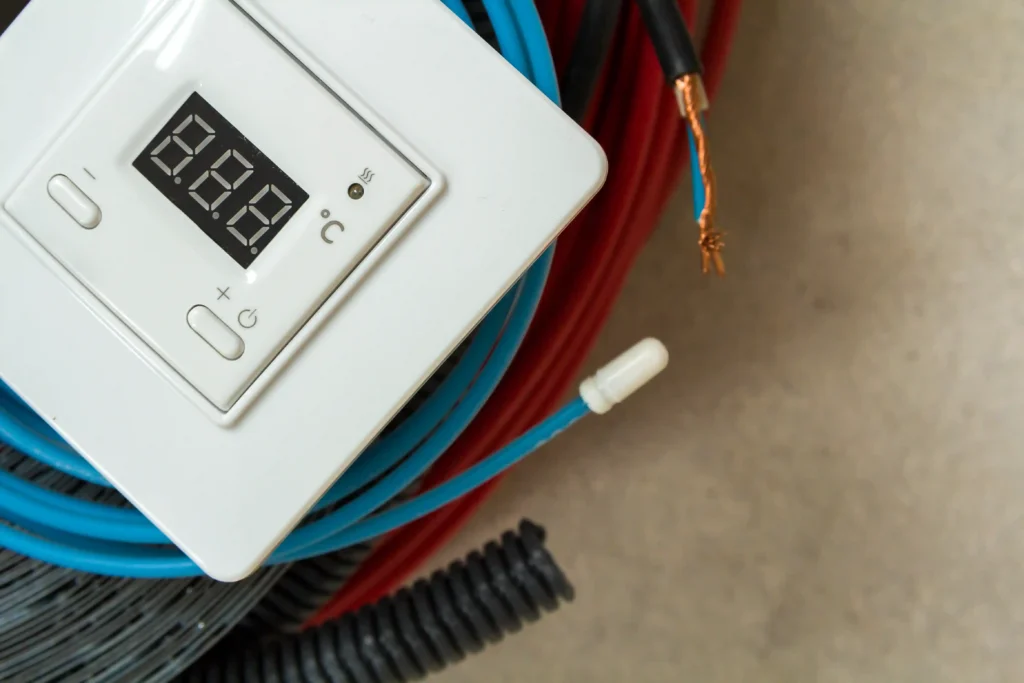
When a Perfection Contracting technician arrives, the first move is simple. We go to the furnace control board and briefly connect the R and W terminals, which mimics a thermostat calling for heat.
If the furnace fires, the problem is the thermostat or the wire between them. If it doesn’t, the problem is the furnace, and we start pulling fault codes. From there we check the transformer output, the fuse, and the safeties.
That one test is why a thermostat complaint usually gets diagnosed in the first ten minutes of the visit.
Frequently Asked Questions
Why is my thermostat screen blank?
Dead batteries are the most common cause, but a blank hardwired thermostat often means the furnace itself lost power: a tripped breaker, a flipped furnace switch, a tripped condensate float switch, or a blown fuse on the control board.
Does a Wi-Fi thermostat still work when it’s offline?
Yes. The schedule is stored on the thermostat, so heating continues. You just lose remote control from the app until it reconnects.
What should I set my thermostat to in winter?
The Department of Energy suggests 68°F while you’re home and awake, with a setback of 7 to 10 degrees while you sleep or are away. Keep it above roughly 55°F in cold snaps to protect your pipes.
When Your Thermostat Stops Talking, Perfection Contracting Listens
Most thermostat trouble comes down to batteries, a bumped setting, or a furnace that quietly lost power. Now you know how to tell them apart.
If you’ve run the checks and the house is still cold, call Perfection Contracting. Our 24/7 heating repair team serves Morris County, Sussex County and the surrounding towns, and we carry common thermostats on the truck so a failed unit gets replaced on the first visit, not the second. Call 973-579-0182.
Tell us what the screen is doing. We’ll take it from there.