
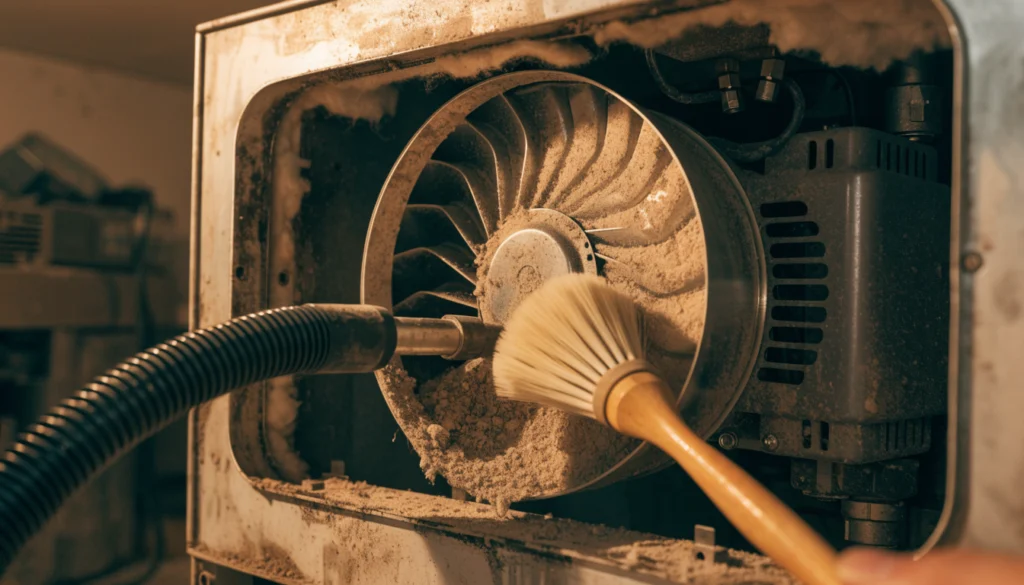
Furnace Ignitor Not Working? Signs It’s Failing, How Long It Lasts, and Replacement Cost
It’s Thanksgiving week. The house is full. The furnace clicks, the fan hums, and then… nothing. No whoosh, no heat, just a blower pushing cold air and a blinking light on the control board.
If that’s your morning, you’re probably looking at a failed ignitor. It’s the single most common no-heat repair we make in Sussex and Morris County once the weather turns, and it’s also one of the least expensive.
This guide walks through what the ignitor does, the signs it’s going, how long one should last, what replacement costs in 2026, and why we’d rather you didn’t buy one online and swap it yourself. Let’s get the heat back on before the turkey goes in.
What the Ignitor Does (and Which Kind You Have)
Older furnaces had a standing pilot, a small flame that burned all the time. Almost nothing installed in the last 25 years works that way.
Modern gas furnaces use one of two electronic ignition systems:
Hot surface ignitor (HSI). By far the most common. A small ceramic element, about the size of a tongue depressor, that heats up like a stove burner until it glows orange-white, hot enough to light the gas when the valve opens. Think of it as a spark plug that glows instead of sparks.
Intermittent pilot (spark ignition). An electrode that throws a spark to light a small pilot, which then lights the main burners. You’ll hear a rapid tick-tick-tick at startup.
Both fail. The hot surface type fails more often, because it goes from room temperature to roughly 2,500 degrees and back every single cycle, and ceramic doesn’t love that.
7 Signs Your Furnace Ignitor Is Failing
1. The furnace clicks but won’t ignite
The classic symptom. The inducer fan starts, you hear the gas valve click, and nothing lights. After a few tries the board locks out.
2. No glow when it should glow
With the lights off and the furnace door’s sight glass in view, you should see the ignitor light up orange a few seconds after the inducer starts. No glow means no power to it or a broken element.
3. A weak or dim glow
Dull red instead of bright orange. The element is tired and not reaching ignition temperature. The furnace may light on the second or third try, then fail completely a few weeks later.
4. Cold air from the vents
The blower runs its cycle, but there was never a flame to heat the air. The thermostat keeps calling and the house keeps cooling.
5. The furnace starts, stops, and tries again
Three or four short attempts and then a lockout is the control board’s way of saying ignition failed. It will usually show as an ignition-failure flash code.
6. Visible cracks or white blisters on the element
If you can see the ignitor, a hairline crack, a chalky white spot, or a dark burn mark on the ceramic means it’s done, even if it still glows a little.
7. A tripped breaker at startup
Less common, but a shorted ignitor can pull enough current to trip the furnace breaker the moment it energizes.
Or Is It Something Else?
Here’s where a lot of online parts orders go wrong. Several other faults look exactly like a bad ignitor.
- Dirty flame sensor. The ignitor glows, the burners light, then shut off two seconds later. That’s the sensor not confirming the flame, not the ignitor failing. It’s a cleaning, not a part.
- Pressure switch not closing. The inducer runs but the ignitor never glows because the board never got the go-ahead. We covered this in our pressure switch guide.
- Gas supply. Ignitor glows beautifully, no flame. Closed valve or no gas.
- Control board. Everything checks out except the board isn’t sending voltage to the ignitor.
Before you assume the ignitor, run the basics in our furnace not turning on checklist. Filter, door switch, breaker, gas valve, one reset.
How Long Does a Furnace Ignitor Last?
Shorter than most people expect. Bryant puts the typical range at three to seven years, and that matches what we see. The older silicon carbide elements sit at the low end; newer silicon nitride ignitors are tougher and often last longer.
What shortens the life of an ignitor:
- A dirty filter. Restricted airflow makes the furnace overheat and cycle more often. More cycles, more heat shock. Filter makers like Filterbuy call this the leading cause of premature ignitor failure, and they’re not wrong.
- Short cycling from an oversized furnace or a thermostat problem.
- Dust and skin oil. A fingerprint on the ceramic creates a hot spot. Never touch the element with bare hands.
- Voltage swings during storms or brownouts.
If your furnace is more than five years old and has never had an ignitor, it’s living on borrowed time. That’s not a reason to panic; it’s a reason to have it looked at in the fall instead of discovered in January.
What Ignitor Replacement Costs in 2026
This is the good news. An ignitor is one of the least expensive furnace repairs there is.
National cost guides put a professional hot surface ignitor replacement at roughly $150 to $300 for parts and labor, with some sources quoting up to $350 for two-stage furnaces or when the flame sensor is replaced at the same time. The part itself is often $25 to $80. Most of what you pay is the diagnosis and the visit, and that diagnosis is exactly the part that keeps you from replacing the wrong component.
Expect an after-hours or holiday premium if it fails on Thanksgiving morning, which is one more argument for the fall tune-up.
What the Repair Visit Looks Like
If you’ve never watched a technician diagnose an ignition problem, here’s the sequence, because it explains why the visit is worth more than the part.
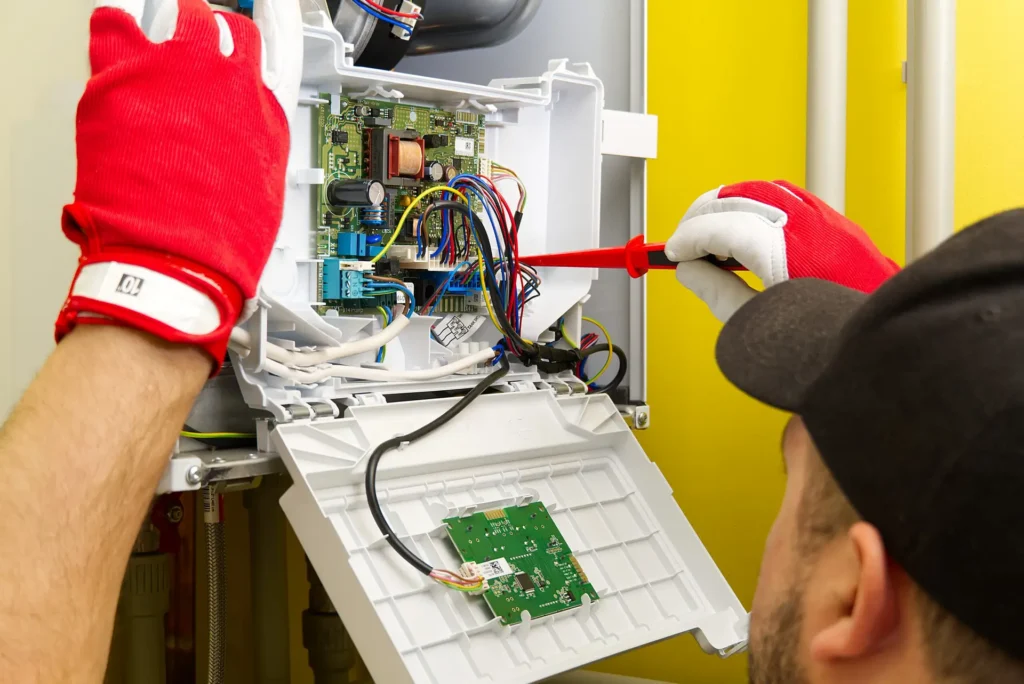
- Watch a full cycle. We confirm the inducer runs, the pressure switch closes, and the board actually sends voltage to the ignitor at the right moment.
- Inspect the element. Cracks, blisters, burn marks, and whether it’s seated in the right spot relative to the burner.
- Measure its resistance. A multimeter reading tells us whether the element is within spec or on its way out, even if it still glows.
- Replace with the OEM-spec part. Power and gas off, correct mount, no skin contact with the ceramic.
- Check the flame sensor and gas pressure. A new ignitor with a dirty sensor still gives you a furnace that lights and quits. We clean the sensor and verify the flame signal before we close the panel.
- Run it again. Two full heating cycles with the door on, then we leave.
Start to finish, usually under an hour.
Why We Don’t Recommend the DIY Swap
Plenty of videos show the replacement. Two screws and a plug. Physically, it’s not hard. Here’s why we still say leave it.
You might not need one. See the list above. Half the “bad ignitor” calls we get are a flame sensor or a pressure switch.
The wrong part works for a week. Universal ignitors come in several voltages and mounting styles. A close-enough match can glow too hot and crack, or sit a quarter inch off and light the burners late with a bang. Delayed ignition is how heat exchangers get damaged.
It’s inside the burner compartment. That’s gas, flame, and a safety rollout switch. Power and gas off, correct torque on the mount, no fingers on the ceramic, and a test of the flame sensor and gas pressure afterward. A technician does all of that in the same 30 minutes.
How to Make the Next One Last
- Change the filter on schedule. The single biggest thing you can do. Here’s how often.
- Fix short cycling instead of living with it.
- Book a tune-up each fall. We check the ignitor’s resistance and look for cracks; a weak one gets replaced on our schedule, not yours. See what a tune-up includes.
- Consider a silicon nitride upgrade at the next replacement if your furnace supports it.
Frequently Asked Questions
How do I know if it’s the ignitor or the flame sensor?
If the burners never light, suspect the ignitor. If they light and then shut off within a few seconds, suspect the flame sensor.
Can a furnace ignitor be cleaned instead of replaced?
No. A hot surface ignitor that’s cracked or weak can’t be restored. The flame sensor next to it can be cleaned, which is a different repair.
Should I replace the ignitor before it fails?
If a tune-up shows it’s weak or cracked, yes. Replacing it on a scheduled visit costs less than an emergency call and avoids a cold house.
Furnace Clicking but Not Lighting? Perfection Contracting Carries the Part
An ignitor failure is a small part, a quick fix, and a very cold wait if nobody has the right one on the truck. We do.
Perfection Contracting provides 24/7 heating repair across Sussex County, Morris County and North Jersey, holidays included. Call 973-579-0182, tell us the flash code, and we’ll have the heat back before dinner.