Furnace Pressure Switch Problems: What the Error Means and Why It Keeps Tripping
The thermostat calls for heat. The furnace hums for about 30 seconds. Then it quits, and a little light on the control board starts blinking at you.
You look up the code. “Pressure switch open.” Or “pressure switch stuck closed.” Either way, no heat, and the internet is full of people telling you to replace the switch.
Here’s what we’ve learned from a lot of these calls across Sussex and Morris County: most of the time, the pressure switch is working perfectly. It’s doing its job, which is refusing to let your furnace light until it’s safe. Something else is the problem, and that something else is often outside your house in the snow.
Let’s walk through what the switch does, what the codes mean, the six things that actually trip it, and what you can safely check before you call.
What a Furnace Pressure Switch Actually Does
When your furnace starts, the first thing that runs is a small fan called the inducer. Its job is to pull combustion gases out of the burner area and push them out the vent before any gas flows.
The pressure switch is the proof. A thin rubber hose connects it to the inducer housing. When the inducer creates enough suction, the switch’s diaphragm flexes and closes a circuit. That closed circuit tells the control board: “Draft confirmed. Go ahead and ignite.”
No draft, no close, no gas. It’s one of the most important safety devices in the furnace, because it’s what keeps carbon monoxide from building up when the vent is blocked.
“Stuck Open” vs. “Stuck Closed”: What the Code Means
Pressure switch open (sometimes “failed to close”) means the inducer ran but the switch never saw enough suction to close. The board waited, gave up, and shut the sequence down. This is by far the more common code, and it almost always points to airflow, not the switch.
Pressure switch stuck closed means the board saw the switch already closed before the inducer started. That shouldn’t be possible, so the board refuses to proceed. The usual cause is water in the hose or a diaphragm that’s stuck.
Every brand flashes these differently. Some common ones:
| Brand | Typical pressure switch code |
|---|---|
| Carrier / Bryant | Code 31 (switch did not close, or reopened) |
| Rheem / Ruud | Code 31 |
| Goodman / Amana | 2 flashes (stuck closed) or 3 flashes (stuck open) |
| York / Luxaire | 3 red flashes (stuck open) |
| Lennox | Varies by board; see panel label |
Always trust the sticker inside your furnace door over any chart online, including ours. Count the flashes, match them to the label, and write it down for the technician.
The 6 Things That Actually Trip a Pressure Switch
In rough order of how often we find them in North Jersey homes.
1. A blocked intake or exhaust pipe
High-efficiency furnaces vent through white PVC pipes that end outside, often low on the side of the house. Snow drifts cover them. Ice builds on the exhaust elbow. Leaves, a wasp nest, or a bird’s nest block them in fall. The inducer can’t pull air through a blocked pipe, so the switch never closes.
This is the number one cause of pressure switch calls after a snowstorm, and it’s the easiest to fix. Clear the pipes and reset the furnace.
2. Condensate backing up
Condensing furnaces make water. That water drains through a trap and a line to a floor drain or pump. When the trap clogs with slime, water backs into the inducer housing and the pressure hose. The switch reads a bad pressure, or it reads closed when it shouldn’t. You’ll usually see water near the base of the furnace. We’ll cover this in depth in our upcoming post on furnaces that leak water.
3. A cracked, kinked, or disconnected hose
The hose between the inducer and the switch is small, rubber, and gets brittle with age. A crack lets the vacuum leak out. A kink pinches it off. A hose that slipped off during a filter change sends no signal at all. Cheap part, common fault.
4. A weak or failing inducer motor
If the inducer is wearing out, it may spin but not pull hard enough. Listen for a grinding, rattling, or squealing sound during those first 30 seconds. A furnace that works on mild days and fails on the coldest nights is a classic sign: cold, dense air makes a marginal inducer fall just short.
5. Wind at the vent termination
A strong gust straight into the exhaust pipe can push back against the inducer and flicker the switch open mid-cycle. If your furnace only acts up on windy days and the pipe faces the prevailing wind, the fix is a termination kit or re-routing the vent, not a new switch.
6. The switch itself
Last on the list on purpose. Diaphragms do wear out, and contacts do fail. But a technician should prove it with a gauge before replacing it. Swapping the switch without finding the real cause just means the new one trips too.
What You Can Safely Check Yourself
None of this requires opening the burner compartment or touching wiring.
- Go outside. Find the PVC pipes. Clear snow, ice, leaves, or anything else from the ends. Keep a three-foot radius clear all winter.
- Look for water. Any pooling at the base of the furnace or around the drain line points to a condensate problem.
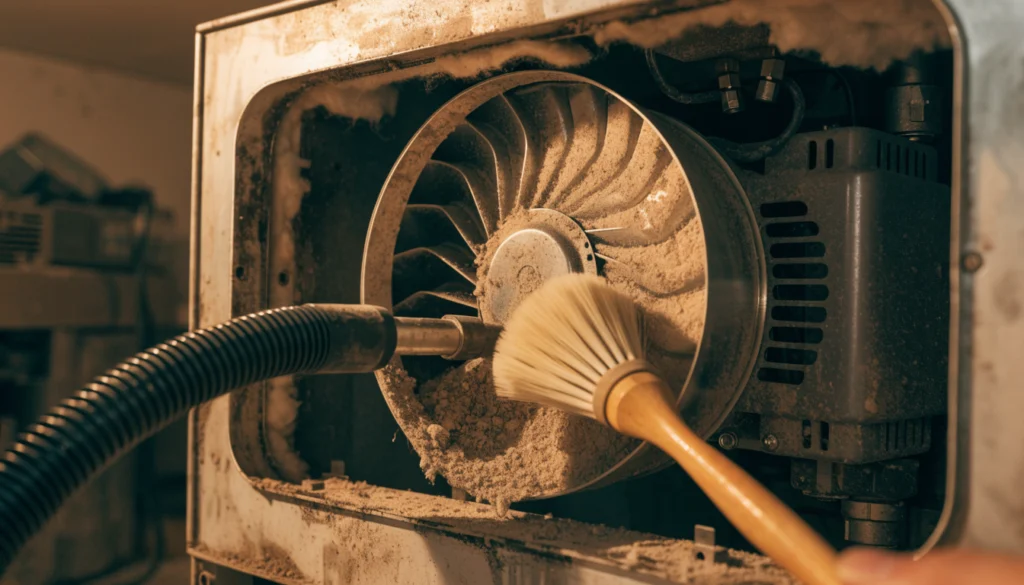
- Listen to the inducer. Smooth hum is good. Grinding or rattling is a motor on its way out.
- Read and record the code. Count the flashes and match the panel label.
- Reset once. Furnace switch off, wait 30 seconds, back on. If it fails again, stop. Repeated resets won’t fix it and can mask a venting problem.
If you cleared a blocked pipe and the furnace lit, you’re done. Anything else, call. Our furnace not turning on checklist covers the other quick checks worth running while you wait.
The One Thing You Should Never Do
Don’t bypass the switch. There are videos out there showing how to jump the two wires so the furnace runs. Please don’t.
A jumped pressure switch means the furnace will light with a blocked vent. Combustion gases, including carbon monoxide, go into your house instead of out of it. The switch tripped for a reason. Find the reason.
How We Diagnose It
When a Perfection Contracting technician shows up for a pressure switch code, the order is always the same.
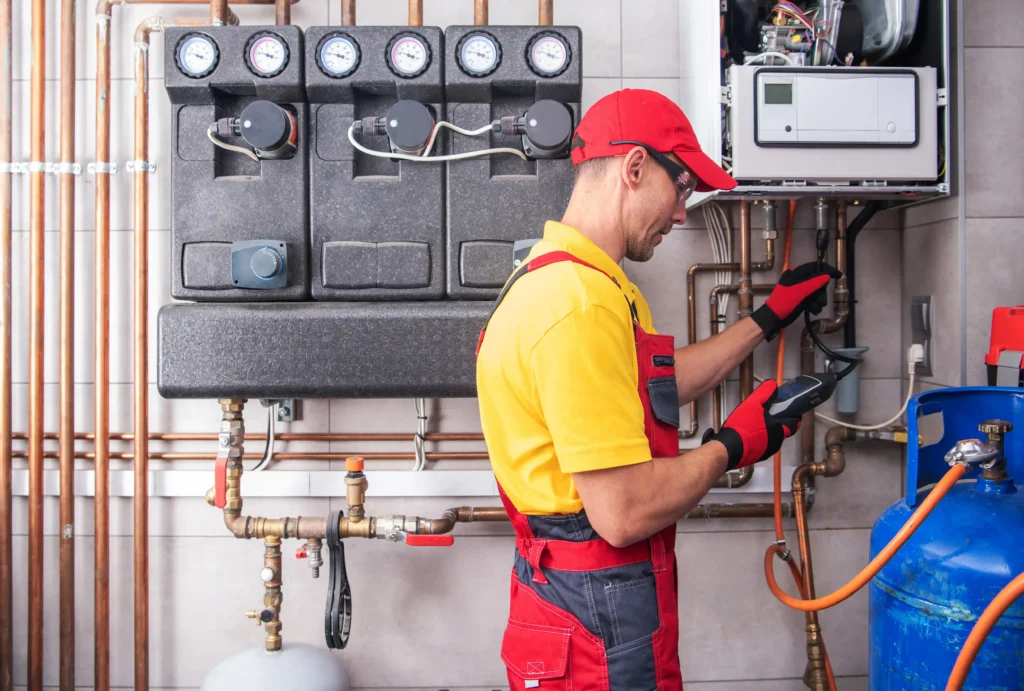
First, we check the vent pipes end to end and the condensate trap. Then we connect a manometer to the pressure hose and measure the actual suction the inducer produces against the rating printed on the switch. If the inducer is making enough draft and the switch still won’t close, the switch is bad. If it isn’t making enough, we move to the inducer, the trap, or the vent.
That one measurement is the difference between fixing the problem and replacing parts until something works. It also lets us check the heat exchanger while the cabinet is open, because a cracked heat exchanger can show up as pressure-switch behavior too.
What It Costs to Fix
National ranges, for perspective. According to HomeGuide, a pressure switch replacement runs $150 to $400 all in, with the part itself at $50 to $200 and a diagnostic fee of $50 to $150 that’s usually applied to the repair. A clogged trap or a cracked hose is typically less than that. A failing inducer motor is the expensive outcome, often in the $700 to $1,500 range depending on the model.
A blocked vent pipe you clear yourself costs nothing, which is why we start there.
How to Keep It From Tripping Again
- Clear the vent pipes after every snowfall. Put it on the same list as the driveway.
- Have the condensate trap cleaned each fall. It’s part of every furnace tune-up we do.
- Replace the pressure hose when it gets stiff. Cheap insurance on a furnace over 10 years old.
- Don’t ignore new inducer noises. A motor that’s starting to grind in October fails in January.
Frequently Asked Questions
Can I run my furnace with a bad pressure switch?
No. The control board won’t allow ignition while the switch is open, and bypassing it removes the protection that keeps combustion gases out of your home.
Why does my furnace pressure switch only trip when it’s very cold or windy?
Cold, dense air and wind pushing against the exhaust both make it harder for the inducer to create draft. A marginal inducer or a poorly placed vent termination fails under those conditions and works fine otherwise.
How long does a furnace pressure switch last?
Often the life of the furnace. When one does fail, it’s usually after 10 or more years, and the hose and trap around it tend to cause trouble first.
Pressure Switch Code Won’t Clear? Call Perfection Contracting
A pressure switch fault is your furnace refusing to do something unsafe. Respect it, check the vent pipes, and then let us find the real cause with the right instrument.
Perfection Contracting provides 24/7 heating repair across Sussex County, Morris County and North Jersey. Tell us the flash code when you call 973-579-0182, and we’ll come ready.