
When to Turn On the Heat in New Jersey (and 6 Things to Check Before the First Cold Night)
There is always one night in early fall when you wake up, pull the blanket a little higher, and wonder whether it is time to turn on the heat.
In Sussex County and the rest of North Jersey, that night usually arrives sometime in October. Days can still feel mild, but overnight temperatures drop into the 40s and the house starts to hold the chill into the morning.
There is no official date to start heating your home. But there is a smarter way to do it than flipping the thermostat to heat on the first cold night and hoping for the best.
Here is how to decide when to turn on the heat, what temperature to set, and the six things we recommend checking before your furnace, boiler or heat pump runs for the first time this season.
When Should You Turn On the Heat in New Jersey?
Most homeowners start heating when indoor temperatures consistently fall below the mid-60s, or when outdoor nighttime temperatures stay in the 40s for several days in a row.
A few practical signals:
- Your home is cooler than about 64 to 65 degrees in the morning
- Overnight lows are regularly in the 40s
- Family members are reaching for sweaters and blankets indoors
- You have older relatives, infants or pets who are sensitive to cold
- Humidity and damp air are making the house feel colder than the thermostat says
There is no prize for holding out the longest. A cold, damp house is uncomfortable and can encourage condensation and moisture problems. Turning the heat on at a moderate setting is usually the better choice.
What Temperature Should You Set the Thermostat To?
The U.S. Department of Energy suggests setting your thermostat to around 68 degrees while you are awake and at home, and lowering it while you sleep or are away. Setting it back 7 to 10 degrees for about eight hours a day can save up to 10 percent a year on heating, according to DOE estimates.
A programmable or smart thermostat makes that easy because it adjusts automatically. For more detail on balancing comfort and savings, see our guide to the best winter thermostat setting for NJ homes.
6 Things to Check Before the First Cold Night
Your heating system has been sitting idle for months. Before you ask it to work, take a few minutes to make sure it is ready.
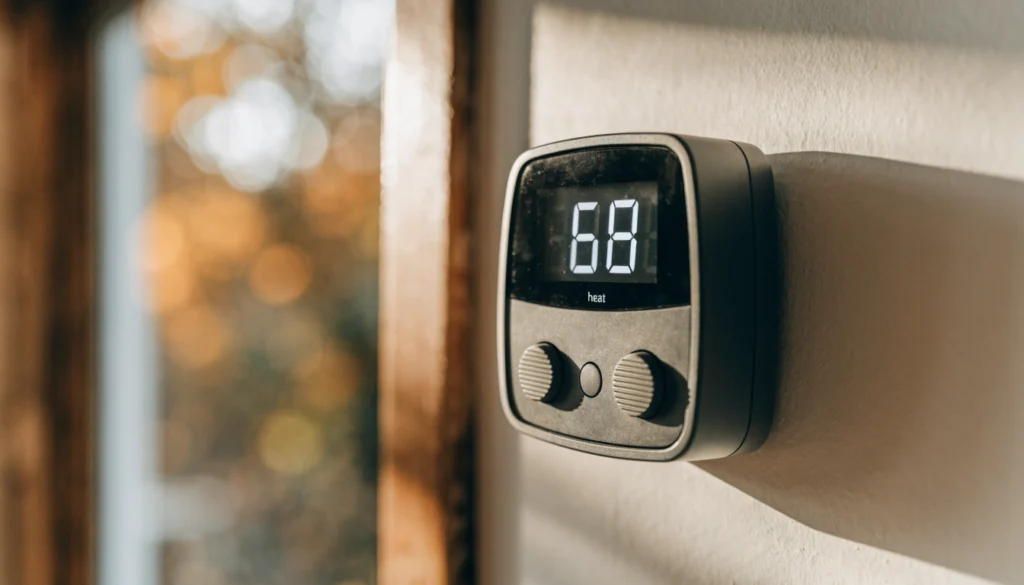
1. Switch the Thermostat to Heat and Test It
It sounds obvious, but this is one of the most common first-of-season service calls.
Set the thermostat to heat and raise the temperature a few degrees above the current room temperature. You should hear the system start within a few minutes and feel warm air or heat from radiators soon after.
If nothing happens, replace the thermostat batteries and check that the system switch and breaker are on.
2. Replace the Furnace Filter
A clogged filter restricts airflow, makes the furnace work harder, and can cause the system to overheat and shut down.
If you cannot remember when you last changed it, change it now. Most standard 1-inch filters need replacement every one to three months during heating season.
3. Clear Vents, Registers and Returns
Walk through the house and make sure furniture, rugs, curtains and storage boxes are not blocking supply registers or return grilles. Blocked vents create cold rooms and put extra strain on the system.
4. Clear the Area Around Your Furnace or Boiler
Basements and utility rooms tend to collect boxes, paint cans, laundry and holiday decorations over the summer.
Keep the area around the furnace, boiler and water heater clear. Combustible materials should never be stored close to heating equipment.
5. Test Your Carbon Monoxide and Smoke Detectors
This is the most important item on the list.
Any system that burns gas, oil or propane can produce carbon monoxide if something is wrong. Press the test button on every CO and smoke detector, replace batteries, and replace any detector that is past its expiration date.
Our post on furnace safety and carbon monoxide explains where detectors should go and what warning signs to watch for.
6. Expect a Brief Burning Smell, but Not a Lasting One
The first time a furnace runs in the fall, dust that settled on the heat exchanger and burners burns off. A faint dusty smell that fades within the first hour or so is normal.
A smell that lingers, smells like burning plastic or wiring, or smells like gas is not normal. Shut the system off and call for service. If you ever smell gas, leave the house and call your gas utility from outside.
What If the Heat Does Not Come On?
If your system will not start, blows cold air, or shuts off after a few minutes, a few simple checks can help:
- Confirm the thermostat is set to heat and has power
- Check the furnace power switch and circuit breaker
- Make sure the furnace door or panel is fully closed
- Replace a dirty filter
- Check that the gas valve is on
Our guide to why a furnace won’t turn on walks through the most common causes. If those steps do not solve it, our 24/7 heating repair team can help.
Why Fall Is the Best Time for a Heating Tune-Up
The first cold week of the season is when heating companies get the most calls. Problems that developed quietly over the summer, like a weak ignitor, a dirty flame sensor or a failing blower motor, tend to show up the first time the system runs hard.
A professional tune-up before winter lets a technician clean and inspect the system, test safety controls and catch small problems before they become a no-heat emergency on a freezing night.
Our heating tune-up service covers furnaces, boilers and heat pumps across Sussex County and North Jersey.
Frequently Asked Questions
What month should I turn on the heat in New Jersey?
Most North Jersey homeowners start using heat sometime in October, when overnight temperatures regularly drop into the 40s. The right time depends on your home, your comfort and who lives there.
Is it bad to turn the heat on and off frequently?
Constantly adjusting the thermostat up and down is not usually harmful, but a consistent schedule is more efficient and comfortable. A programmable thermostat helps.
Why does my house smell like burning when I first turn on the heat?
Dust that collected on the furnace over the summer burns off when the system first runs. The smell should fade within an hour or so. If it lingers or smells electrical, shut the system off and call for service.
What temperature should I keep my house in winter?
Around 68 degrees while you are home and awake is a common recommendation, with a lower setting while sleeping or away.
Get Your Heat Ready Before the Cold Arrives
The best time to find out your heating system has a problem is on a mild October afternoon, not at 2 a.m. during the first hard freeze.
If you want peace of mind before winter, Perfection Contracting can tune up and inspect your furnace, boiler or heat pump. Schedule a heating tune-up or call 973-579-0182.
Related Services
Keep Reading
- Do Heat Pumps Really Work in Cold New Jersey Winters?
- Furnace Tune-Up: What a Heating Tune-Up Actually Includes (and Why October Is the Time to Book It)
- Wall-Mounted AC Without an Outdoor Unit: Do They Work?
Browse all HVAC tips and guides.
Need a technician? Perfection Contracting serves homeowners across Sussex County, NJ and the surrounding North Jersey service area.