
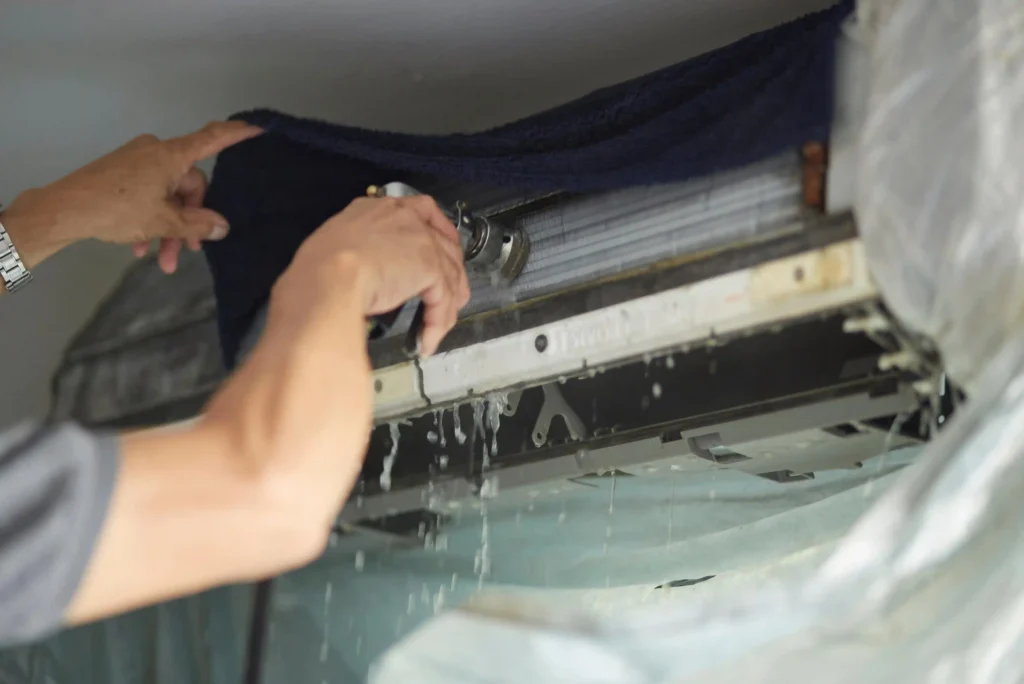
You didn’t expect this when you walked into your home.
A puddle. Right under your AC.
At first, it looks harmless. Just a little water. But give it a few hours, and that small leak can turn into stained ceilings, warped flooring, and even mold.
We’ve seen it happen more times than we can count.
Here’s the good news. Most AC leaks are fixable. And in many cases, you can even identify the problem yourself before calling a professional.
In this guide, we’re going to walk you through exactly what to do. Step by step. No fluff. No guesswork.
Why Does Your AC Leak Water in the First Place?
Before we fix anything, let’s make one thing clear.
Your AC is supposed to produce water.
That’s normal.
When your air conditioner runs, it pulls humidity out of the air. That moisture turns into condensation and flows through a drain line outside your home.
On a hot, humid day, your system can produce several gallons of water per day.
But here’s where things go wrong.
When that water can’t drain properly, it backs up… and ends up leaking inside your home.
That’s the real issue.
What To Do Immediately When You Notice the Leak?
Let’s not overcomplicate this. If your AC is leaking, act fast.
- Turn Off Your AC
This is the first move. Always.
Running your AC while it’s leaking can make the problem worse and increase the risk of water damage.
- Clean Up the Water
Grab towels, a mop, or a wet vacuum. Remove standing water as quickly as possible.
- Check Where the Water Is Coming From
Is it:
- Around the indoor unit?
- Dripping from the ceiling?
- Near vents?
This helps you narrow down the cause faster.
- Protect Your Home
Move furniture, electronics, and anything valuable away from the leak.
Step-by-Step Troubleshooting (Start Here First)
Now we get into the real fix.
We’re going to walk through the most common causes. Start from the top and work your way down.
Step 1: Check the Condensate Drain Line (Most Common Issue)
If we had to bet, this is the problem.
A clogged drain line is responsible for the majority of AC leaks.
Over time, dirt, dust, mold, and algae build up inside the line. Eventually, water gets blocked and backs up into your home.
How to Fix It
- Locate the drain line (usually near your indoor unit)
- Use a wet/dry vacuum to clear the clog
- Flush it with a mix of water and vinegar
Pro Tip
If you notice slimy buildup, that’s algae. Regular cleaning can prevent this entirely.
Step 2: Check for a Frozen Evaporator Coil
Here’s something many homeowners don’t expect.
Sometimes, your AC leaks because it freezes first.
When airflow is restricted or refrigerant levels are low, the evaporator coil can freeze. Once it melts, all that ice turns into water.
Signs to Look For
- Ice on the unit
- Weak airflow
- Warm air instead of cool air
What to Do
- Turn off the system
- Let the ice thaw completely
- Check your air filter (next step)
Step 3: Inspect Your Air Filter
This one is simple. But it’s often overlooked.
A dirty air filter restricts airflow. That can cause your system to freeze and eventually leak.
Quick Fix
- Replace your filter if it looks clogged
- Aim to change it every 1 to 3 months
This small habit can prevent bigger problems.
Step 4: Check the Drain Pan
Your AC has a drain pan that catches water before it exits through the drain line.
But over time, especially in older systems, that pan can crack or rust.
Signs
- Water pooling directly under the unit
- Visible damage to the pan
Fix
- Minor damage: temporary seal
- Major damage: replace the pan
Step 5: Check If Your AC Is Properly Leveled
This one is less common, but it happens.
If your unit isn’t level, water won’t flow correctly into the drain line.
Instead, it spills inside.
Fix
- Adjust the unit slightly to ensure proper tilt toward the drain
Step 6: Inspect the Condensate Pump (If You Have One)
Some systems use a pump to move water out.
If that pump fails, water has nowhere to go.
Signs
- Water buildup despite a clear drain line
- Pump not making noise
Fix
- Reset or replace the pump
Quick Diagnosis Table (Save This)
What You See | Likely Cause | What To Do |
Water near AC unit | Clogged drain line | Vacuum + flush |
Ice buildup | Frozen coil | Turn off + thaw |
Weak airflow | Dirty filter | Replace filter |
Rust or cracks | Drain pan issue | Replace pan |
When It’s Time to Call a Professional?
Let’s be real.
Not everything is a DIY fix.
You should call a professional if:
- The leak keeps coming back
- You suspect refrigerant issues
- There are electrical concerns
- You’re unsure about the cause
Trying to fix complex AC issues without experience can lead to bigger, more expensive problems.
How Much Does It Cost to Fix an AC Leak?
This depends on the cause.
Here’s a rough breakdown:
- Drain line cleaning: $75–$250
- Drain pan replacement: $150–$600
- Refrigerant-related issues: $300–$1,500+
- Condensate pump replacement: $100–$500
💡 Tip: Fixing the problem early is always cheaper than waiting.
How to Prevent Your AC From Leaking Again?
Prevention is where most homeowners win.
Here’s what we recommend:
- Clean your drain line every few months
- Replace your air filter regularly
- Schedule annual HVAC maintenance
- Install a safety float switch
According to industry studies, regular HVAC maintenance can reduce system breakdowns by up to 95%.
That’s huge.
Frequently Asked Questions
Why is my AC leaking water inside my house?
Most of the time, it’s a clogged drain line or restricted airflow.
Is it normal for AC to leak water?
Yes—but only outside your home.
Can I keep running my AC if it’s leaking?
No. This can cause serious damage.
Can a dirty filter cause leaks?
Absolutely. It can lead to frozen coils and water overflow.
Don’t Ignore the Warning Signs
Here’s what we’ve learned over the years.
AC leaks rarely start as major problems. They start small. Easy to ignore.
But if left untreated, they can lead to costly repairs, water damage, and even health issues like mold.
The best move?
Catch it early. Fix it fast. And when in doubt, bring in a professional.
At the end of the day, having a trusted HVAC expert makes all the difference.
That’s where Perfection Contracting, Inc. comes in.
With decades of hands-on experience, certified technicians, and a reputation built on reliability, they’ve helped homeowners diagnose and fix issues like this before they turn into bigger problems.
If your AC is leaking and you want it handled the right way, they’re the team you call.
Related Services
- Cooling Services
- Air Conditioning Repair
- Air Conditioning Installation
- Air Conditioning Maintenance Service
- Ductless Mini-Splits
Keep Reading
- Quietest AC Systems for Noise-Sensitive Homes (2026 Guide)
- 10 Warning Signs Your AC Needs Repair (Don’t Ignore)
Browse all HVAC tips and guides.
Need a technician? Perfection Contracting serves homeowners across Sussex County, NJ and the surrounding North Jersey service area.