
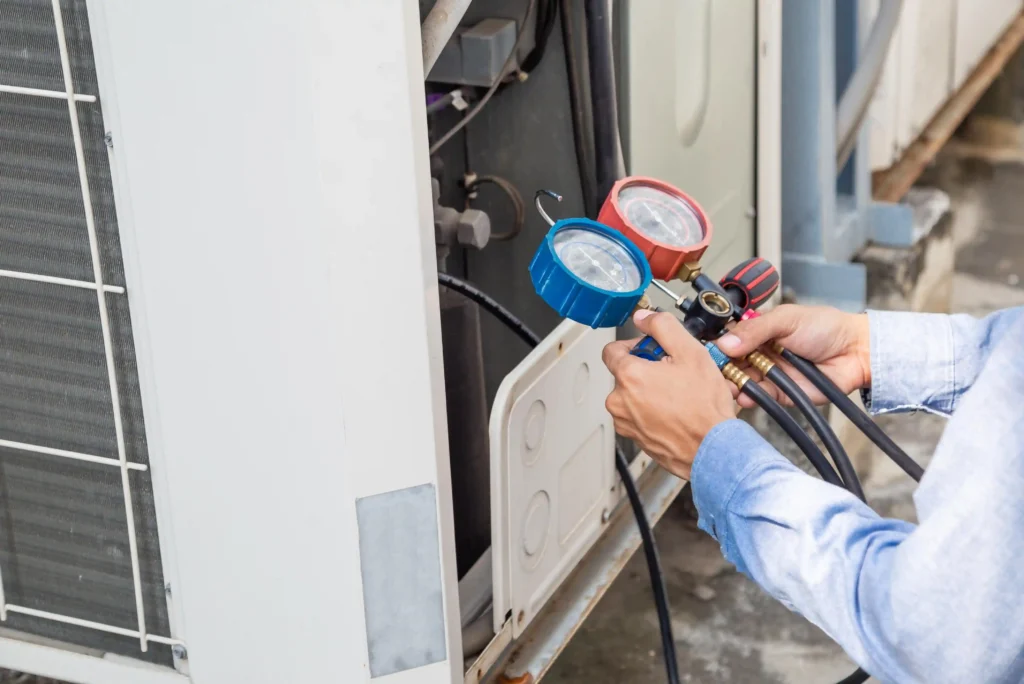
If your AC isn’t cooling like it used to, your first instinct might be to lower the thermostat.
We see this all the time.
But here’s the truth most homeowners don’t realize:
your AC doesn’t just “lose refrigerant.” If levels are low, there’s a leak somewhere.
And if you ignore it?
That small issue can quietly turn into one of the most expensive HVAC repairs you’ll ever face.
Let’s walk you through exactly how to catch a refrigerant leak early—before it gets worse.
Why Refrigerant Leaks Are a Bigger Problem Than You Think?
Refrigerant is what makes your AC actually cool your home. It absorbs heat inside and releases it outside.
So when there’s a leak, everything starts to break down.
Your system:
- Works harder
- Runs longer
- Consumes more energy
- Cools less effectively
Over time, this doesn’t just affect comfort. It can damage your compressor—the heart of your system.
And once that fails, you’re not looking at a repair anymore.
You’re looking at a replacement.
Early Signs Your AC Might Have a Refrigerant Leak
Here’s where most homeowners miss it.
The signs are subtle at first. But once you know what to look for, they’re easy to spot.
1. Your AC Is Blowing Warm or Weak Air
This is usually the first red flag.
If your AC is running but your home isn’t cooling down, low refrigerant could be the reason.
- Your Energy Bills Suddenly Spike
Nothing changed in your usage—but your bill went up.
That’s because your AC is working overtime to compensate for lost refrigerant.
- Ice Is Forming on Your AC Unit
This one surprises people.
Low refrigerant can actually cause your evaporator coil to freeze.
If you see ice on:
- Indoor unit
- Refrigerant lines
- Outdoor condenser
Don’t ignore it.
- You Hear Hissing or Bubbling Sounds
This is one of the clearest indicators.
- Hissing = small leak
- Bubbling = larger leak
That sound is refrigerant escaping under pressure.
- Your Home Feels More Humid Than Usual
Your AC doesn’t just cool—it removes humidity.
When refrigerant levels drop, humidity control drops too.
- Your AC Runs Longer Than Normal
If your system never seems to shut off, it’s struggling to hit the set temperature.
And that often points to a refrigerant issue.
How to Check for a Refrigerant Leak Yourself? (Safely)
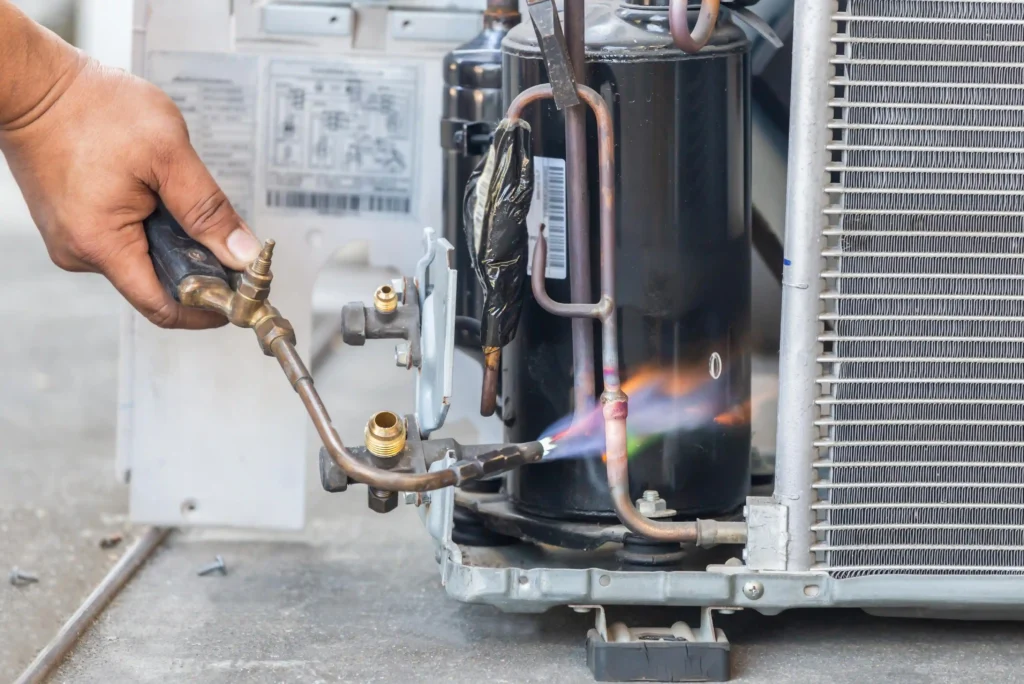
Now let’s talk about what you can actually do before calling a pro.
1. Do a Visual Inspection
Look around your system for:
- Oily residue on refrigerant lines
- Corrosion or worn areas
- Loose connections
Refrigerant leaks often leave behind oil traces.
- Listen Closely
Turn off background noise and listen near your unit.
That faint hissing sound? It matters.
- Use the Soap Bubble Test
This is a simple trick we’ve used in the field.
- Mix soap and water
- Apply it to suspected areas
- Watch for bubbles forming
If bubbles appear, you likely found a leak.
- Check for Ice or Frost
If your coils or lines are freezing, that’s a strong sign of low refrigerant.
- Pay Attention to Performance Changes
Sometimes, the biggest clue is how your home feels.
If comfort drops but your system keeps running, something’s off.
How Professionals Detect Refrigerant Leaks? (What We Do Differently)
Here’s where things get more precise.
As HVAC professionals, we don’t guess—we confirm.
We use:
- Electronic leak detectors (sniffer tools)
- UV dye testing to trace leaks
- Pressure testing for system integrity
These tools help us pinpoint the exact location of the leak, not just the symptoms.
What Causes Refrigerant Leaks in the First Place?
This isn’t random.
There’s always a reason behind it.
Common causes include:
- Corrosion in coils (especially in older systems)
- Wear and tear over time
- Poor installation or loose fittings
- Physical damage to refrigerant lines
- Factory defects (less common, but possible)
Why You Should Never Ignore a Refrigerant Leak?
Let’s be direct.
Ignoring a leak doesn’t save money—it multiplies the cost.
Here’s what can happen:
- Compressor failure (most expensive repair)
- Higher monthly energy bills
- Reduced system lifespan
- Complete AC breakdown
Can You Keep Running Your AC With a Leak?
Short answer?
You shouldn’t.
Running your AC with low refrigerant:
- Damages internal components
- Reduces efficiency
- Speeds up system failure
It’s like driving a car with no oil.
You might get away with it for a while—but not for long.
Repair vs. Replacement: What Makes More Sense
This depends on your system.
Repair Makes Sense If:
- The leak is small
- Your system is relatively new
- Damage is localized
Replacement Might Be Better If:
- Your system is 10–15+ years old
- There are multiple leaks
- Repair costs are stacking up
We always recommend the option that gives you the best long-term value—not just the cheapest short-term fix.
How to Prevent Refrigerant Leaks in the Future?
Prevention is where you save the most money.
Here’s what we recommend:
- Schedule annual AC maintenance
- Keep coils clean and protected
- Ensure proper installation from the start
- Monitor your energy bills for changes
- Address small issues early
When It’s Time to Call a Professional?
DIY checks are helpful—but they only go so far.
If you notice:
- Persistent cooling issues
- Ice buildup
- Strange sounds
- Rising energy costs
It’s time to bring in a professional.
Because refrigerant handling isn’t just technical—it’s regulated for safety reasons.
Don’t Let a Small Leak Turn Into a Major Repair
We’ve seen it too many times.
What starts as a small refrigerant leak turns into a full system replacement—simply because it was ignored.
The good news?
If you catch it early, you can avoid all of that.
And that’s exactly what this guide is about.
Need Help? Work With a Team That Gets It Right the First Time
At Perfection Contracting, Inc., we don’t just fix AC systems—we help homeowners avoid costly mistakes.
From advanced leak detection to honest repair recommendations, we focus on long-term solutions that actually make sense for your home.
If your AC isn’t cooling like it should, don’t wait.
Schedule your inspection today and get ahead of the problem before it gets worse.
Related Services
- Cooling Services
- Air Conditioning Repair
- Air Conditioning Installation
- Air Conditioning Maintenance Service
Keep Reading
- The Complete Guide to AC Leak Detection, Causes, and Repair for Homeowners & Businesses
- Why Is My AC Leaking Water? Common Causes and Fixes for Homeowners
Browse all HVAC tips and guides.
Need a technician? Perfection Contracting serves homeowners across Sussex County, NJ and the surrounding North Jersey service area.