

Deciding to repair or replace your air conditioner matters for homeowners in Morris County, NJ. The local summers put extra strain on HVAC systems. From our experience, the main factors are age, repair cost, energy efficiency, and clear signs the system is failing.
This guide explains those points, including SEER ratings and local climate effects. Knowing these facts helps you choose the option that saves money and keeps your home comfortable over time.
Key Takeaways
- The age of an AC unit significantly influences repair or replacement decisions, with units over 10 years often needing replacement.
- The “5,000 Rule” helps homeowners evaluate repair costs against system age to decide on repair versus replacement.
- Higher SEER ratings in newer AC models offer substantial energy savings compared to older units with lower efficiency.
- Signs like compressor failure, use of outdated refrigerants, and frequent major repairs indicate the need for AC replacement.
- New Jersey’s hot, humid climate accelerates AC wear, affecting lifespan and increasing the likelihood of earlier replacement.
- Rising energy utility rates in NJ encourage investing in more energy-efficient air conditioning systems to reduce long-term costs.
- Compliance with NJ refrigerant regulations is essential for environmental standards and impacts repair and replacement choices.
- Professional HVAC assessments provide accurate evaluations, helping homeowners avoid unnecessary repairs and select appropriate AC solutions.
The Age Factor
The age of an air conditioning system plays a significant role in determining whether it’s best to repair or replace the unit.
Generally, most AC units have an average lifespan of about 15 to 20 years. If your system is younger than 7 years, repairs are usually the most sensible option, as the unit likely still has significant operational life left. In contrast, for units over 10 years old, careful evaluation of repair costs becomes crucial. This age factor coincides with frequent breakdowns, where it may be more cost-effective to consider replacement.
Understanding the system’s age helps homeowners navigate their options better.
The Cost Rule of Thumb
Assessing repair costs in relation to the system’s age can guide homeowners toward making the right decision. A commonly referenced guideline is the “5,000 Rule,” which suggests multiplying the repair cost by the age of the unit. If this total exceeds $5,000, homeowners should lean toward replacement rather than costly repairs alone. For instance, if a repair costs $400 on a 10-year-old system, the total would be $4,000—indicating that repairs are warranted.
Conversely, a $600 repair on a 14-year-old unit totals $8,400, signaling a need for replacement. Understanding these financial implications can significantly influence decision-making for homeowners.
This table shows how repair cost combined with system age points to different recommendations when homeowners assess their AC options.
Efficiency Consideration
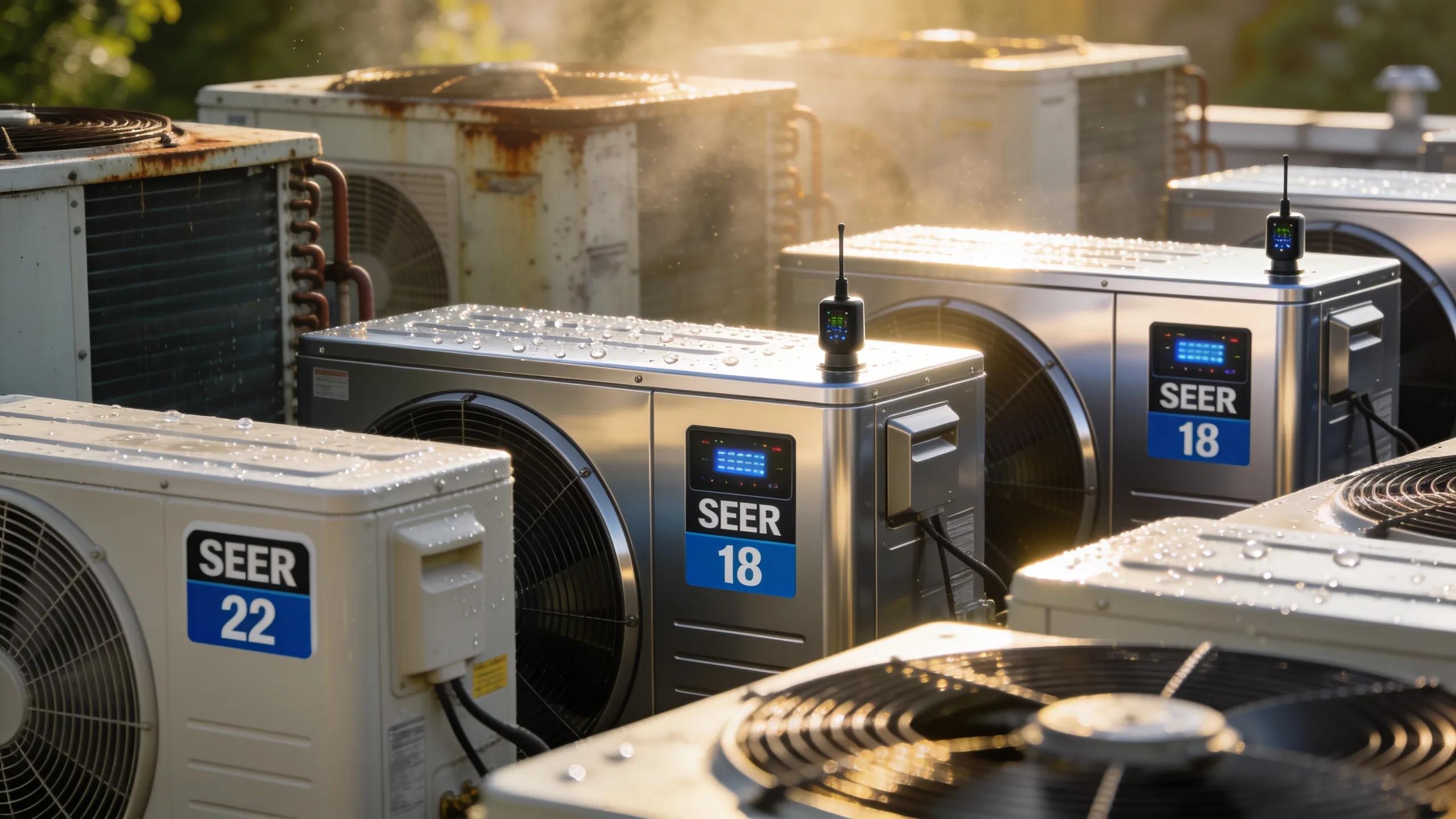
Energy efficiency matters when you decide to repair or replace. Newer AC’s usually have higher SEER scores and use less power. Older units often have SEER ratings between 10 and 13, while models built after 2015 can reach 16 or higher.
Compare the energy savings of a new system to the upfront cost. Lower monthly bills and reduced environmental impact are common benefits.
Signs It’s Time to Replace
Recognizing the signs that indicate an air conditioning unit needs replacement can save homeowners from further stress and financial strain. Key signs include:
- Compressor Failure: When an older system’s compressor fails, repairs are typically expensive and may not be worth the investment.
- Old Refrigerant Types: Units using R-22 refrigerant face challenges since this type is being phased out. The unavailability of refrigerants can drive repair costs higher.
- Frequent Major Repairs: Multiple repairs within a short time frame often signal chronic problems that could warrant replacement instead of continued service.
From our experience, spotting these issues early can prevent bigger repair bills and downtime.
When Should You Consider Replacing Your Air Conditioner?
Replace the unit if it keeps breaking down or your bills jump without more use. In NJ’s hot, humid summers, a struggling system can fail when you need it most. If you’re thinking about replacement, review local air conditioning installation options in Morris County.
What Are the Common Signs You Need a New AC System?
Watch for these warning signs so you can avoid larger problems later.
- Age of the Unit: If your air conditioner is nearing the end of its typical lifespan, replacement should be on your radar.
- Rising Energy Bills: A sudden spike in cooling costs, especially without a corresponding increase in usage, signals inefficiency that may necessitate a new unit.
- Frequent Repairs: If repairs become a regular occurrence, investing in a new unit can prove more economical in the long run.
Pay attention to these signals to prevent bigger issues down the road.
How Does NJ’s Climate Affect Your AC’s Lifespan and Replacement Timing?
NJ’s hot, humid summers put extra stress on ACs and can shorten their life. From our experience, regular maintenance helps, but the climate can still force earlier replacement. Knowing how local weather affects your system helps you plan ahead.
How to Evaluate AC Repair Costs: Understanding the 5,000 Rule in NJ?
Use the 5,000 Rule to judge repair costs against system age. If you see several failures in a short time, rethink repairs and consider a new system.
What Is the 5,000 Repair Cost Formula and How Does It Guide Decisions?
The 5,000 formula gives a quick way to see when repairs stop making sense. It shows when continuing to fix a unit costs more than replacing it. That clarity helps you plan long-term costs.
When Is Repairing Your AC More Cost-Effective Than Replacing It?
Repairs often make sense for minor fixes or newer units. If your AC is under 10 years and needs a small part like a capacitor, repair can extend its life. Professional AC repair can keep a working system running longer.
Why Energy Efficiency Matters: Comparing SEER Ratings for NJ Homeowners?
Energy efficiency affects operating costs. Choose higher SEER units to cut energy bills over time. Don’t focus only on purchase price—lower running costs add up over years.
How Do Higher SEER Ratings Translate to Energy Savings in Morris County?
Higher SEER ratings mean the unit uses less power, which lowers monthly bills. Over several years, those savings can add up and offset the initial cost.
What Are the Benefits of Upgrading from Old Refrigerants Like R-22?
Moving off old refrigerants like R-22 is important. New refrigerants meet current rules, often run better, and can lower upkeep costs. From our experience, professional AC service helps keep the system working well and meets refrigerant standards.
What Role Does System Age Play in Repair vs Replace Decisions?
System age is a key factor. Older units break more and cost more to fix. From our experience, repair bills add up fast as systems age.
What Is the Typical Lifespan of an AC Unit in NJ’s Climate?
Under good care, ACs last about 15–20 years. In New Jersey’s humid climate, they can wear out sooner if not maintained. Size, quality, use, and care all affect how long a unit lasts.
How Does System Age Affect Repair Frequency and Cost Over Time?
Older systems need repairs more often and those fixes cost more. Knowing this link helps you plan for replacement and budget for repairs.
How Can Local NJ Factors Influence Your AC Repair or Replacement Choice?
Local weather and energy prices change the repair vs replace choice. Big seasonal swings and higher rates make efficiency more important. Check local costs when you decide.
How Do Rising NJ Energy Utility Rates Impact Long-Term AC Costs?
When energy rates rise, an efficient AC can save more money over the unit’s life. Acting early can cut operating costs over time.
What NJ Regulations Should Homeowners Know About Refrigerants and Efficiency?
Know NJ rules on refrigerants and efficiency. The state is phasing out some refrigerants. Staying compliant helps the environment and affects repair and replacement choices.
What Are Your Options for Reliable AC Repairs and Installations in Morris County?
You have local repair and installation choices. Pick contractors with strong reputations and positive customer feedback to get quality work.
How Does Experienced HVAC Professional Service Ensure Smart Choices?
An experienced HVAC pro helps you decide. They inspect the system, point out real problems, and recommend the best fix. From our experience, that prevents costly mistakes.
Where Can You Find Honest Assessments for Repair Versus Replacement in NJ?
Look for qualified contractors who give honest assessments. Accurate evaluations stop unnecessary repairs and show the right next step for your AC.
Frequently Asked Questions
What is the average lifespan of an air conditioning unit?
Most ACs last 15–20 years. Maintenance, use, and climate change that range. In humid places like New Jersey, units can wear faster without proper care. Regular upkeep makes them last longer and run better.
How can I increase the lifespan of my AC system?
To extend life, change or clean filters, keep refrigerant at the right level, and get an annual professional check. Keep the outdoor unit clear and airflow free. Timely repairs and a maintenance plan help your system run well and last longer.
Are there financing options available for AC replacements and repairs?
Many HVAC companies offer financing to spread replacement or repair costs. Ask local contractors about low-interest loans or payment plans that fit your budget.
What should I look for in a reliable HVAC contractor?
Check licensing, insurance, and customer reviews. A good contractor gives clear estimates, explains services, and offers parts and labor warranties. Look for certifications that show training on modern systems and local rules.
How do I know if my AC system is operating efficiently?
Watch your energy bills for unexplained spikes. Check the temperature drop from vents versus the thermostat; a small difference can mean trouble. Unusual noises or uneven cooling also point to efficiency problems.
When is the best time of year to replace my air conditioner?
Spring or fall are the best times to replace an AC. Contractors are less busy, so you may get better timing and pricing. Replacing before peak summer helps avoid emergency repairs during the heat.
What energy-saving tips can help reduce my cooling costs?
Use a programmable thermostat to manage temps. Keep your system maintained and seal ducts to stop cooled air loss.
Choose higher SEER models when replacing. Use fans to move air and close blinds in hot sunlight. Small changes cut cooling costs.
Conclusion
Choosing repair or replacement can save money and improve comfort. Know the key factors like system age and energy use before you decide.
Talk with experienced professionals for clear advice and help choosing the right option. Use our resources to compare your options.
Related Services
- AC Replacement
- Cooling Services
- Air Conditioning Repair
- Air Conditioning Installation
- Air Conditioning Maintenance Service
Keep Reading
- AC Troubleshooting Guide: What to Check Before Calling for Repair
- Is It Expensive to Run the AC All Day?
Browse all HVAC tips and guides.
Need a technician? Perfection Contracting serves homeowners across Sussex County, NJ and the surrounding North Jersey service area.