How to Clean a Furnace: What You Can Safely Do Yourself and What Needs a Technician
A clean furnace runs more efficiently, lasts longer and is less likely to break down on a cold night.
But “cleaning a furnace” means very different things depending on who is doing it. Some tasks are safe and easy for any homeowner. Others involve gas, combustion and electrical components that should be left to a trained technician.
Here is what you can safely do yourself, what needs a professional, and why fall is the right time to get it done.
Why Furnace Cleaning Matters
Over time, dust, lint and debris build up inside a furnace. That buildup can:
- Restrict airflow and make the system work harder
- Insulate the blower and burners so they run less efficiently
- Cause dirty flame sensors and failed ignition
- Contribute to overheating and safety shutdowns
- Send dust back into your home
A furnace that is cleaned and inspected once a year generally runs more reliably than one that is ignored until it fails.
What You Can Safely Clean Yourself
Always turn the furnace off at the thermostat and the service switch before cleaning anything. If you have a gas furnace, never remove or adjust gas components.
1. Replace or Clean the Air Filter
This is the most important thing a homeowner can do. A 1-inch filter usually needs replacement every one to three months during heating season. Our guide on how often to change your furnace filter covers sizes and MERV ratings.
2. Vacuum Around the Furnace
Vacuum the floor and the outside of the cabinet. Clear away boxes, laundry, paint cans and anything else stored nearby. Combustible materials should never sit close to heating equipment.
3. Vacuum the Return Grilles and Supply Registers
Remove register covers, wash or vacuum them, and vacuum just inside the duct opening. This helps reduce dust and the first-start burning smell.
4. Check the Condensate Line on a High-Efficiency Furnace
If you have a high-efficiency furnace with white PVC venting, look at the condensate drain and trap for visible clogs or leaks. Do not disassemble the trap unless the manufacturer’s instructions say it is safe to do so.
5. Keep Outdoor Vents Clear
High-efficiency furnaces often vent through a side wall. Keep leaves, snow and debris away from the intake and exhaust pipes.
What Needs a Technician
These parts of furnace cleaning involve combustion, gas or electrical components. Mistakes can cause carbon monoxide problems, gas leaks or expensive damage.
- Burners: cleaning and checking flame quality
- Heat exchanger: inspection for cracks or corrosion
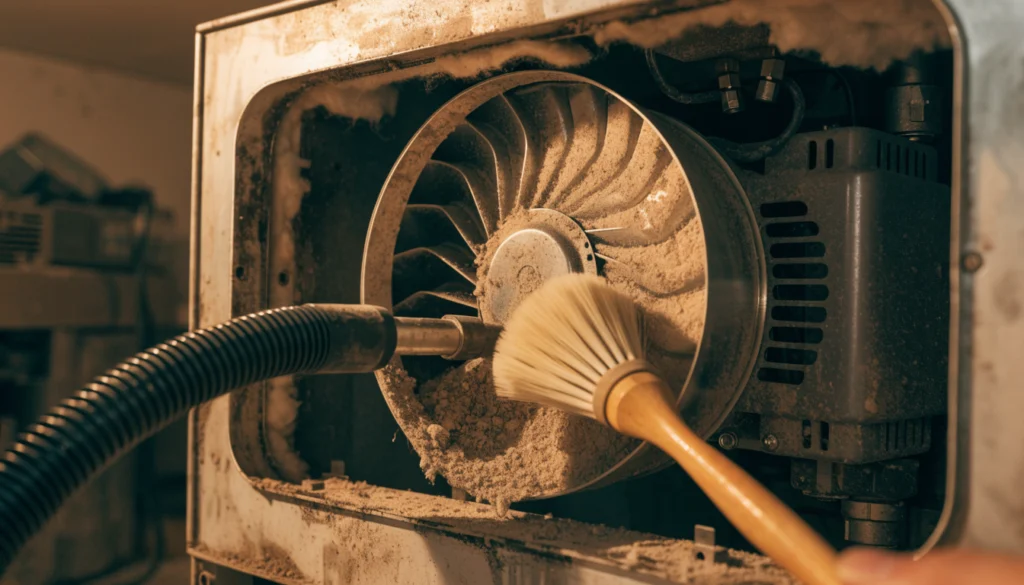
- Blower motor and wheel: removal and deep cleaning
- Ignitor and flame sensor: testing and cleaning
- Gas valve and gas pressure: adjustment and leak checks
- Venting and draft: confirming combustion gases leave the home
- Electrical controls: tightening connections and testing safety switches
A dirty flame sensor is a common cause of a furnace that lights and then shuts off. It is a small part, but it sits inside the burner compartment, so we recommend having it handled during professional service.
DIY vs. Professional Furnace Cleaning
| Task | Homeowner | Technician |
|---|---|---|
| Replace air filter | Yes | Yes |
| Vacuum around furnace and registers | Yes | Yes |
| Clear outdoor vents | Yes | Yes |
| Clean burners | No | Yes |
| Inspect heat exchanger | No | Yes |
| Clean blower wheel | No | Yes |
| Clean flame sensor and test ignitor | No | Yes |
| Check gas pressure and venting | No | Yes |
| Test for carbon monoxide | No | Yes |
How Much Does Furnace Cleaning Cost?
Furnace cleaning is usually done as part of a tune-up or annual maintenance visit rather than as a separate service. The price depends on the type of system and what the technician finds.
The best value is typically an annual maintenance plan that includes cleaning, inspection and priority service. Learn more about our heating service plans.
Why Fall Is the Best Time
Cleaning and inspecting your furnace before it runs every day means small problems get found while the weather is still mild. Waiting until the first freeze often means competing with no-heat emergency calls.
Our heating service and maintenance visits cover cleaning, safety checks and adjustments for furnaces across Sussex County and North Jersey.
Frequently Asked Questions
How often should a furnace be professionally cleaned?
Once a year is the standard recommendation, ideally in early fall.
Can I clean my furnace myself?
You can safely replace the filter, vacuum around the unit and registers, and keep vents clear. Burners, heat exchanger, gas and electrical components should be handled by a technician.
Does cleaning a furnace improve efficiency?
Yes. Clean burners, a clean blower and good airflow help the furnace deliver heat with less wasted energy.
Is furnace cleaning the same as duct cleaning?
No. Furnace cleaning focuses on the equipment itself. Duct cleaning addresses the ductwork throughout the house.
Get Your Furnace Cleaned and Inspected
Let a professional handle the parts that matter most for safety. Perfection Contracting can clean, inspect and tune up your furnace before winter. Schedule heating service or call 973-579-0182.