
Benefits of Ductless Mini-Splits: Are They Worth It in NJ?
Are ductless mini-splits worth it? For most Sussex County homes that lack ductwork, need to condition a specific space, or want to cut heating costs without a major renovation, the answer is yes. For a home with good ductwork and a central system that works, the answer is often no. This page lays out the real benefits of ductless mini-splits alongside their limitations so you can decide for your own house rather than take a sales pitch at face value.
Perfection Contracting has installed, maintained and repaired ductless systems in Sussex County since they first became common here. We are a Mitsubishi Electric Diamond Preferred Contractor, and we also install and service central systems, boilers and geothermal, so we have no reason to steer you toward ductless if it is not the right fit.
Questions after reading? Call (973) 579-0182.
Benefit 1: No Ducts Means No Duct Losses
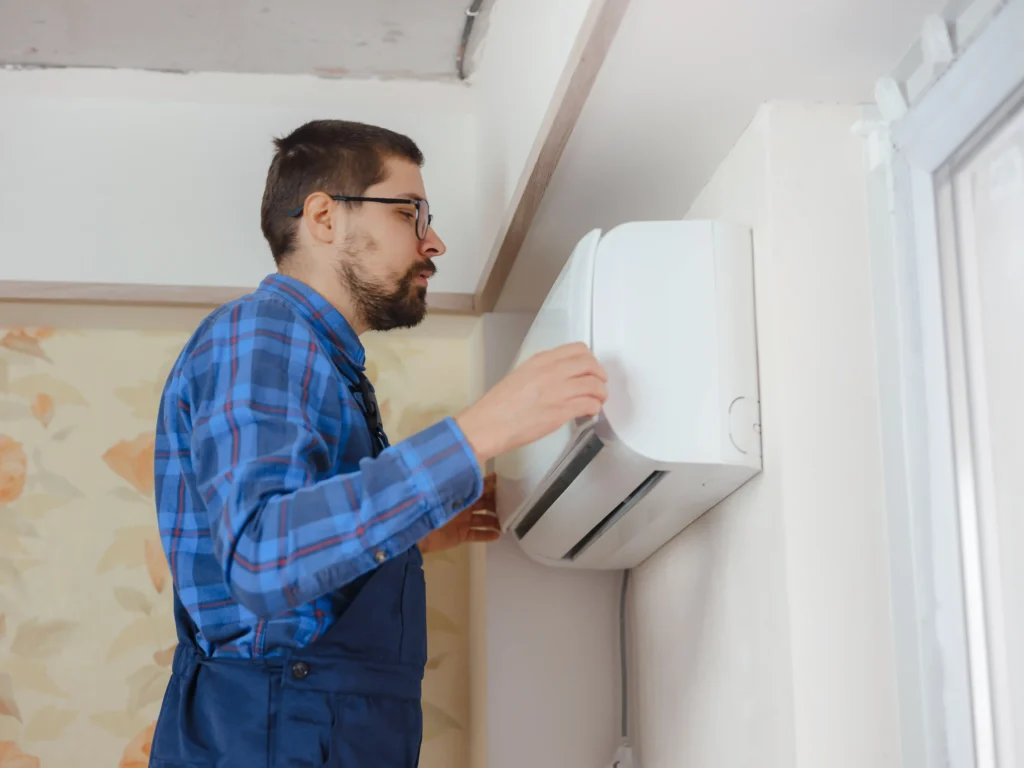
The U.S. Department of Energy estimates that a typical forced-air system loses a meaningful share of its heated or cooled air through leaks and uninsulated ducts, often in the 20 to 30 percent range for ducts running through attics and crawlspaces. A ductless unit delivers conditioned air directly into the room, so none of that energy is lost between the equipment and the space. In an older home with ducts in an unconditioned attic, this alone can be the biggest efficiency gain available.
Benefit 2: Inverter Technology Cuts Energy Use
A conventional central system runs at full speed until the thermostat is satisfied, shuts off, then repeats. A ductless mini-split uses an inverter-driven compressor that varies its speed continuously to match the load, so it runs longer at low output instead of cycling on and off. That steadier operation uses less electricity, holds temperature within a degree or two, and removes more humidity in summer because the coil stays cold for longer periods.
Benefit 3: Room-by-Room Zoning
Each indoor unit has its own thermostat. A guest bedroom can sit at 60 degrees in winter while the living room is at 70. A home office can be cooled in the afternoon without cooling the bedrooms. With a multi-zone system, this applies to the whole house, and the savings from not conditioning empty rooms add up quickly in a larger home.
Benefit 4: Real Heating in a Sussex County Winter
The older objection to mini-splits, that they cannot heat in cold weather, no longer holds for cold-climate models. Mitsubishi‘s Hyper-Heating units, for example, are rated to deliver heating capacity at outdoor temperatures well below zero, which covers the coldest nights in Vernon, Montague or High Point. Because a heat pump moves heat rather than generating it, that heating typically costs far less to run than electric baseboard, propane or oil for the same output.
The caveat is that the unit must be a cold-climate model sized for the heating load, not just the cooling load. A budget unit chosen for summer will struggle in January.
Benefit 5: Installation Without Demolition
Adding central air to a house with no ducts means opening walls and ceilings, giving up closet space for chases and usually weeks of construction. A ductless installation needs a single three-inch penetration per indoor unit and is typically completed in a day or two. For finished spaces, historic homes and additions, that difference is decisive.
Benefit 6: Quiet Operation and Cleaner Air
Indoor units run at a whisper, quieter than a window air conditioner by a wide margin, and the outdoor unit is quieter than a conventional condenser. Because there is no ductwork collecting dust and no return grille pulling air from a basement, the air delivered is only the room’s own air, filtered at the unit. Homeowners with allergies often notice the difference.
Where Ductless Falls Short
Honesty about the trade-offs is what lets you make a good decision:
- Appearance. A wall-mounted unit is visible. Ceiling cassettes and concealed ducted units solve this in the rooms where it matters, at added cost.
- Upfront cost per zone. Conditioning every room of a large house with ductless can cost more than a central system if ductwork already exists and is in good shape.
- Maintenance is hands-on. Filters need monthly rinsing and the indoor units need a professional deep cleaning regularly. Neglected units get musty and lose efficiency.
- Air distribution within a zone. One wall unit serves one open area well. A zone that includes a hallway and two closed bedrooms needs a ducted head or separate units.
- Outdoor unit placement. Multi-zone systems concentrate the outdoor equipment; it needs a spot with clearance, snow protection and a tolerable view.
Benefits of Ductless Mini-Splits vs. the Alternatives
Versus window air conditioners: ductless wins on efficiency, noise, security and heating capability, and it does not block a window. This is the most common upgrade we make in Sussex County lake homes and older houses.
Versus central air with existing ducts: if the ducts are sound and the house has one or two thermostats that satisfy everyone, a high-efficiency central heat pump or dual-fuel system is usually the more economical choice. Ductless makes sense here for the rooms the ducts do not reach.
Versus baseboard or oil heat: ductless typically cuts heating cost substantially and adds cooling, but it requires enough zones to cover the whole house in winter.
Versus geothermal: geothermal offers higher efficiency and longer equipment life but requires ductwork or radiant distribution and a much larger upfront investment. We install both and can compare them for your property.
So, Are Mini-Splits Worth It?
They are worth it when they solve a problem your current system cannot: no ducts, a room that never gets comfortable, window units you are tired of, or heating bills from baseboard or oil that keep climbing. They are worth a second look when a central system already works well and the ducts are in good condition.
The best way to know is a short in-home visit. We will look at the house, the existing equipment and how you actually use the space, and tell you which option fits. Call (973) 579-0182 or use the form on this page. Perfection Contracting serves all of Sussex County and nearby Morris and Warren County towns.
Frequently Asked Questions
Are mini-splits worth it in New Jersey?
For homes without ductwork, rooms a central system does not reach, or households replacing window units or expensive electric or oil heat, yes. For a home with sound ductwork and a central system that satisfies everyone, a central heat pump is often the better value.
Do mini-splits really heat in cold weather?
Cold-climate models do. Look for a unit rated to deliver capacity at sub-zero temperatures and make sure it is sized for the heating load. Standard efficiency models lose capacity as it gets colder and are better suited to cooling-first applications.
How much can I save with a ductless system?
It depends on what you are replacing. Savings are largest when replacing electric baseboard, oil heat or window units and smallest when replacing a newer central heat pump. We can estimate it for your home from your current bills.
Do mini-splits increase home value?
Buyers in our area generally see a professionally installed ductless system as a plus, particularly in homes that previously had no cooling. We do not quote a specific dollar figure because it varies by property.
What is the lifespan of a mini-split?
With regular maintenance, quality ductless systems commonly last well over a decade. The single biggest factor is whether the indoor units are kept clean and the drain lines clear.
Can one mini-split cool my whole house?
A single indoor unit serves one open area. Cooling or heating a whole house takes a multi-zone system with a unit in each major space, or a mix of ductless and ducted equipment.
Related Services
REQUEST A FREE QUOTE NOW
Related Ductless Services
- Ductless Mini-Splits
- Mini-Split Installation
- Mini-Split Repair
- Mini-Split Maintenance
- Multi-Zone Ductless Systems
- Heat Pumps
- VRF Systems
- Mitsubishi Diamond Contractor
- Cooling Services
- Heating Services
Service area: Sussex County, Morris County, Warren County and Bergen County. See every town we serve.