
Is a Geothermal Heat Pump Worth the Upfront Cost? Clear Answers for New Jersey Homeowners
With energy bills climbing, many homeowners are looking for smarter ways to heat and cool their homes. Geothermal heat pumps use the earth’s steady temperature to cut energy use and can deliver strong savings over time. This article breaks down whether the upfront investment makes sense for New Jersey homeowners. We cover the costs, likely savings, environmental benefits, and what to expect for return on investment so you can weigh your options clearly.
At a glance
- Geothermal heat pumps tap the earth’s stable temperature to lower heating and cooling energy needs.
- Installation typically falls between $10,000 and $35,000, depending on system complexity and property size.
- Federal tax credits and state incentives can meaningfully reduce initial costs.
- Homeowners often see 20% to 60% reductions in heating and cooling bills after installation.
- Top-rated geothermal systems can reach efficiencies around 500%, producing about five units of heat or cooling for each unit of electricity used.
- Lower utility bills and reduced emissions are common benefits of switching to geothermal.
- Ground loop designs deliver steady heating and cooling year-round with relatively low energy use.
- Carefully review incentives and long-term savings before deciding on installation.
Financial Implications
Understanding the costs is key. Installation for a geothermal heat pump usually runs from $10,000 to $35,000, with the final price tied to system type, yard space, and local site conditions. That said, federal tax credits plus New Jersey or regional programs can shrink the out-of-pocket expense. Over time, many homeowners recoup the investment through lower utility bills—typical savings fall between 20% and 60% on heating and cooling costs—so the long-term picture often looks more favorable than the sticker price alone.
If you’re weighing the financial commitment, factor in available incentives, your current energy costs, and how long you plan to stay in the home. For many homeowners, the energy savings over time make geothermal installations a practical investment.
Energy Savings

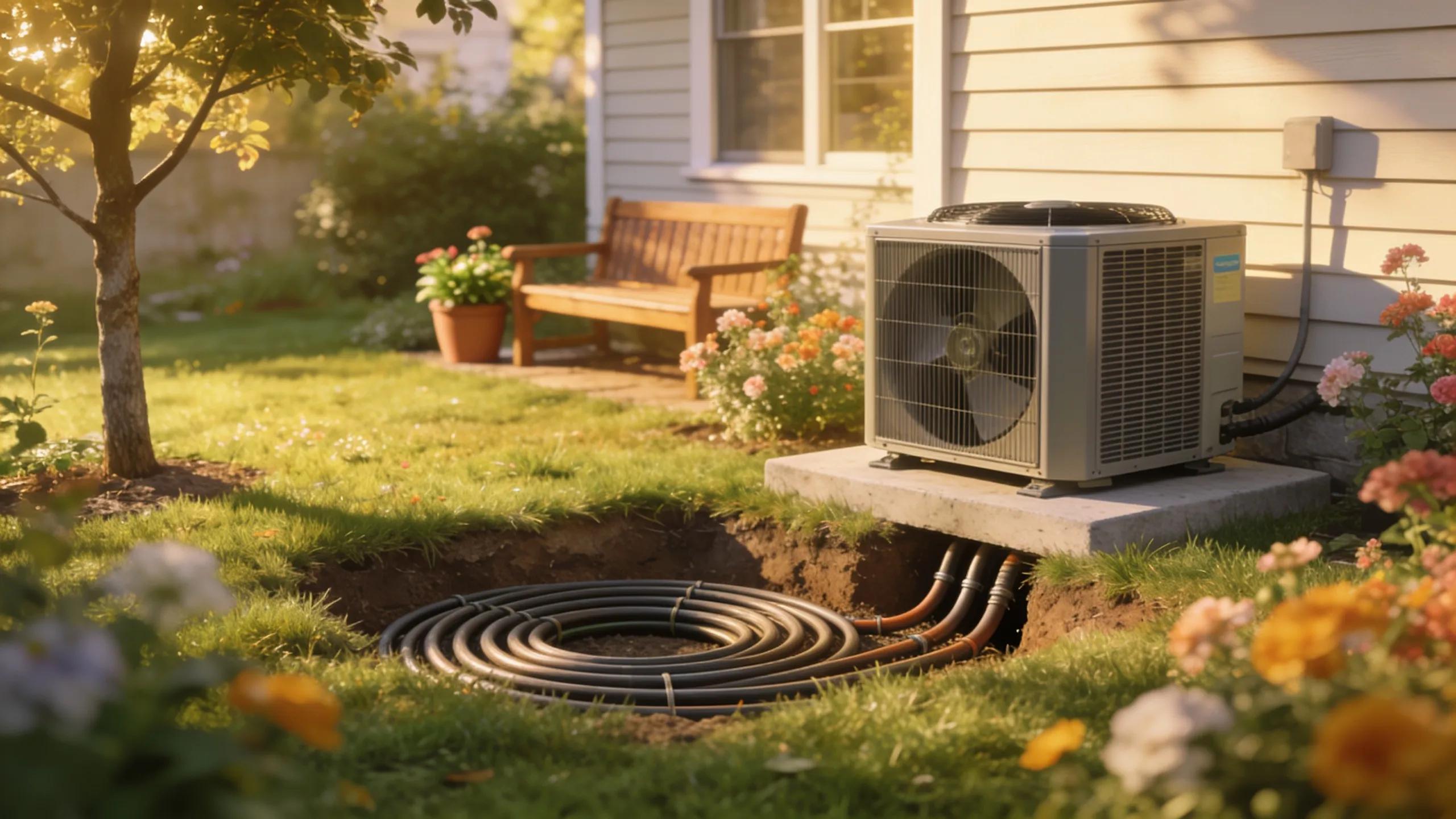
Geothermal systems are known for strong energy performance and can cut energy use by as much as 70% in some cases. They use underground loops to move heat between the house and the earth, allowing steady heating and cooling with less electricity. High-efficiency systems can deliver around 500% performance, meaning roughly five units of heating or cooling for each unit of electricity consumed. Those gains translate into smaller utility bills and lower household emissions. If you’re having problems with your current air conditioner, see our air conditioning repair services.
Frequently Asked Questions
1. What maintenance is required for geothermal heat pumps?
Maintenance needs are fairly low compared with traditional heating and cooling systems. Typical tasks include replacing air filters every few months, checking fluid levels, and keeping the ground-loop area clear of obstructions. Scheduling an annual professional check-up helps catch small problems before they grow and keeps the system running well.
2. Can geothermal heat pumps work for all types of homes?
Geothermal systems can suit many home types—single-family houses, multi-story homes, and some commercial buildings. Fit depends on factors like available land for loop installation and local soil conditions. Properties with enough outdoor space and suitable ground conditions are the best candidates; a professional site assessment will confirm what’s possible.
3. How long do geothermal heat pumps last?
Indoor components typically last 20 to 25 years, while ground loops can remain functional for 50 years or more when installed correctly. That lifespan, paired with steady energy savings, often makes geothermal systems a sound long-term choice. Regular upkeep will help you get the most life out of the equipment.
4. Are geothermal heat pumps noisy?
Geothermal units are usually quieter than conventional HVAC systems. Most noise comes from the indoor unit, but it runs smoothly and with fewer moving parts, so it’s generally unobtrusive. Outdoor sounds from ground loops are typically muffled by the soil, so you can expect a calm indoor environment.
5. What is the payback period for a geothermal heat pump?
Payback commonly falls between 5 and 10 years, depending on installation cost, local energy rates, and how efficient your current system is. Taking advantage of federal and state incentives can shorten that timeline. Over the life of the system, lower energy bills usually outweigh the initial expense.
6. Can geothermal heat pumps provide hot water as well?
Yes. Adding a desuperheater lets a geothermal system capture extra heat to warm household hot water. That setup can cover a large portion of your hot water needs and further reduce monthly energy costs. Discuss this option with your installer during planning.
7. What types of geothermal systems are available?
The main system types are closed-loop, open-loop, and hybrid configurations. Closed-loop systems circulate fluid through buried pipes and can be installed horizontally, vertically, or in a pond. Open-loop systems use water from a well or surface source. Hybrids combine geothermal with conventional systems for flexibility. The best choice depends on site conditions, budget, and your heating and cooling needs.
Final thoughts
Installing a geothermal heat pump can bring significant energy savings and reduce your home’s environmental footprint. New Jersey homeowners may benefit from lower utility bills and various financial incentives that make the upgrade more accessible. Review the available programs, compare costs and expected savings, and consult a qualified installer to find the right fit for your home.
Related Services
Keep Reading
- Is Radiant Floor Heating Worth It in a NJ Home?
- Heat Pump vs. Furnace: Which Heats Better in NJ Winters?
Browse all HVAC tips and guides.
Need a technician? Perfection Contracting serves homeowners across Sussex County, NJ and the surrounding North Jersey service area.