
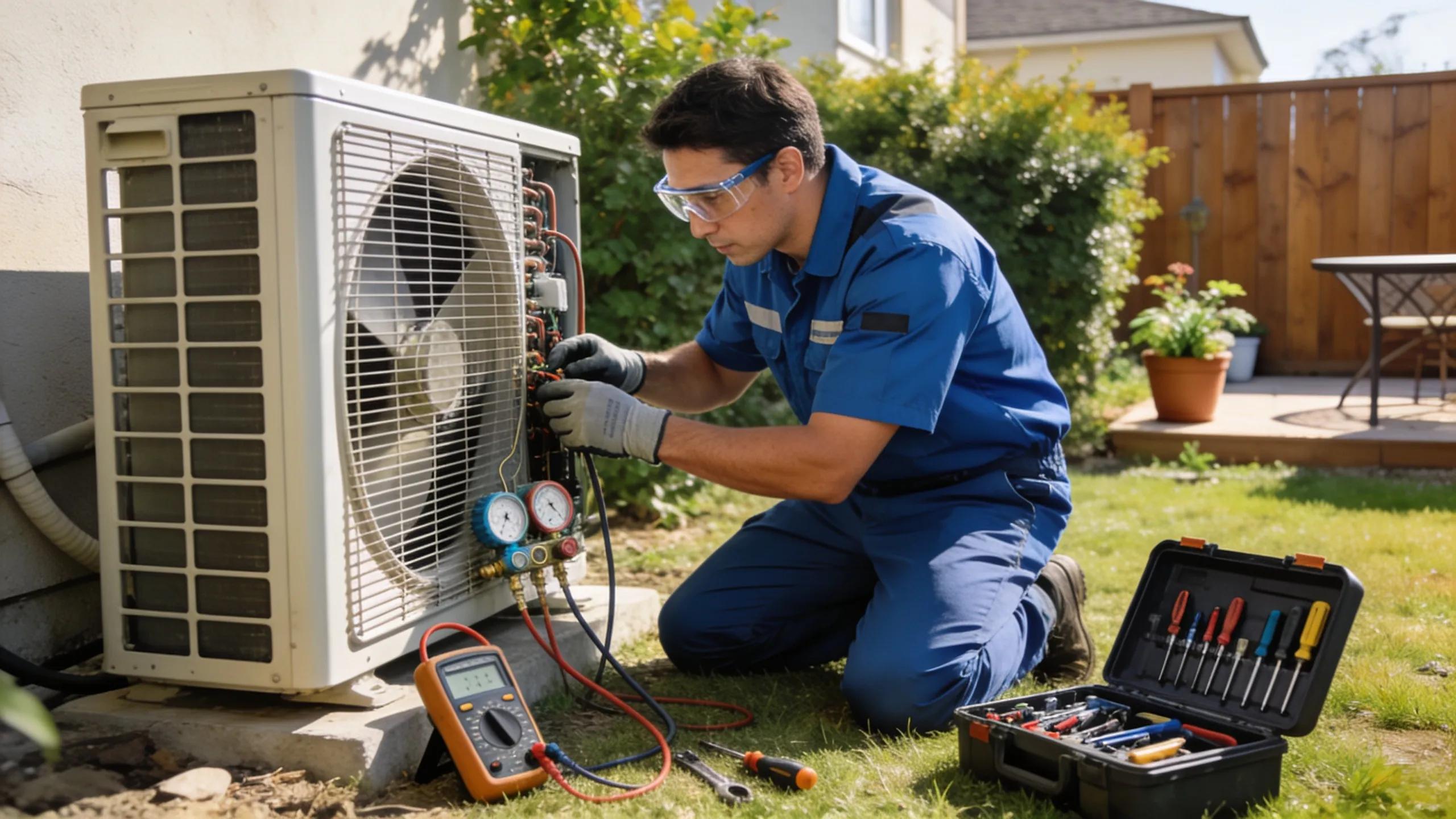
Air conditioner problems often start small but can be hard to fix without the right skills. From our experience, a step-by-step diagnostic finds the root cause so repairs last. Homeowners see failures most in summer, which can make quick fixes costly. This guide explains the key checks technicians use: visual inspection, electrical testing, refrigerant checks, airflow tests, and performance testing.
Key Takeaways
- Technicians begin AC diagnostics with a visual inspection of indoor and outdoor units for visible issues.
- Electrical system checks verify capacitors, contactors, and voltage to prevent system failures.
- Refrigerant system evaluation includes pressure measurement, leak detection, and superheat/subcooling calculations.
- Airflow assessments measure temperature splits, identify duct obstructions, and evaluate fan performance.
- System performance tests confirm correct cycling and document findings for homeowner communication.
- Proper refrigerant levels are crucial to avoid symptoms like reduced cooling or compressor overload.
- Understanding the diagnostic process helps homeowners recognize when professional HVAC service is necessary.
- Technicians use specialized tools and methods to ensure accurate troubleshooting and reliable AC repairs.
SECTION 1 – Visual Inspection
Visual checks are the first step because they catch obvious signs that lead to bigger problems. Technicians inspect both indoor and outdoor units for dirt, damage, or blocked airflow. Those findings point to the next tests, like electrical checks.
- Checking the Outdoor Unit: This involves ensuring the unit is free from debris or obstructions that could hinder airflow, and verifying that the condenser coils are clean and undamaged.
- Inspecting the Indoor Unit: Technicians assess the state of the air filters and ducts, looking for signs of dirt or wear that may affect airflow and efficiency.
- Thermostat Settings: Confirming that the thermostat is set correctly and operational is crucial, as incorrect settings can mislead homeowners into thinking there is a larger issue.
Visual checks not only show the unit’s current condition but also help decide which systems to test next, such as the electrical components.
SECTION 2 – Electrical System Check
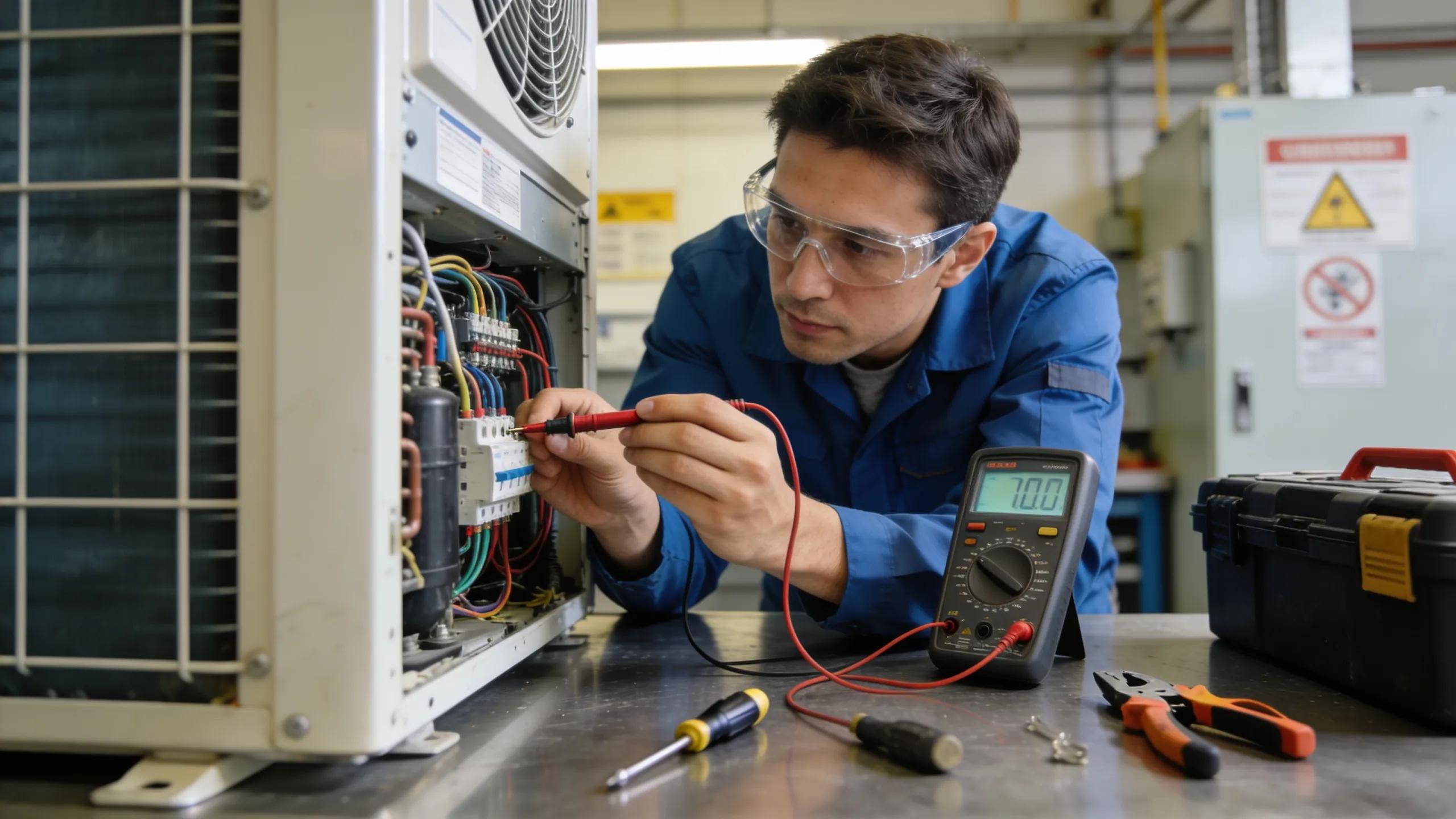
Electrical checks make sure the unit can run safely and without unexpected shutdowns. Technicians test capacitors and contactors, measure voltage with a multimeter, and look for loose or burned wires. Finding electrical faults early prevents further damage and narrows down the repair needed.
- Testing Capacitors and Contactors: These components are essential for the efficient operation of the AC unit, and their failure can lead to system shutdowns or inefficiencies.
- Importance of Voltage Checks: Technicians utilize multimeters to ensure all electrical connections are secure and within manufacturer specifications. This prevents overload and potential damage.
- Common Failure Points: Identifying typical failure points, such as loose connections or burned wires, can significantly streamline troubleshooting efforts.
Once the electrical system is sound, technicians move on to check the refrigerant system.
SECTION 3 – Refrigerant System Check
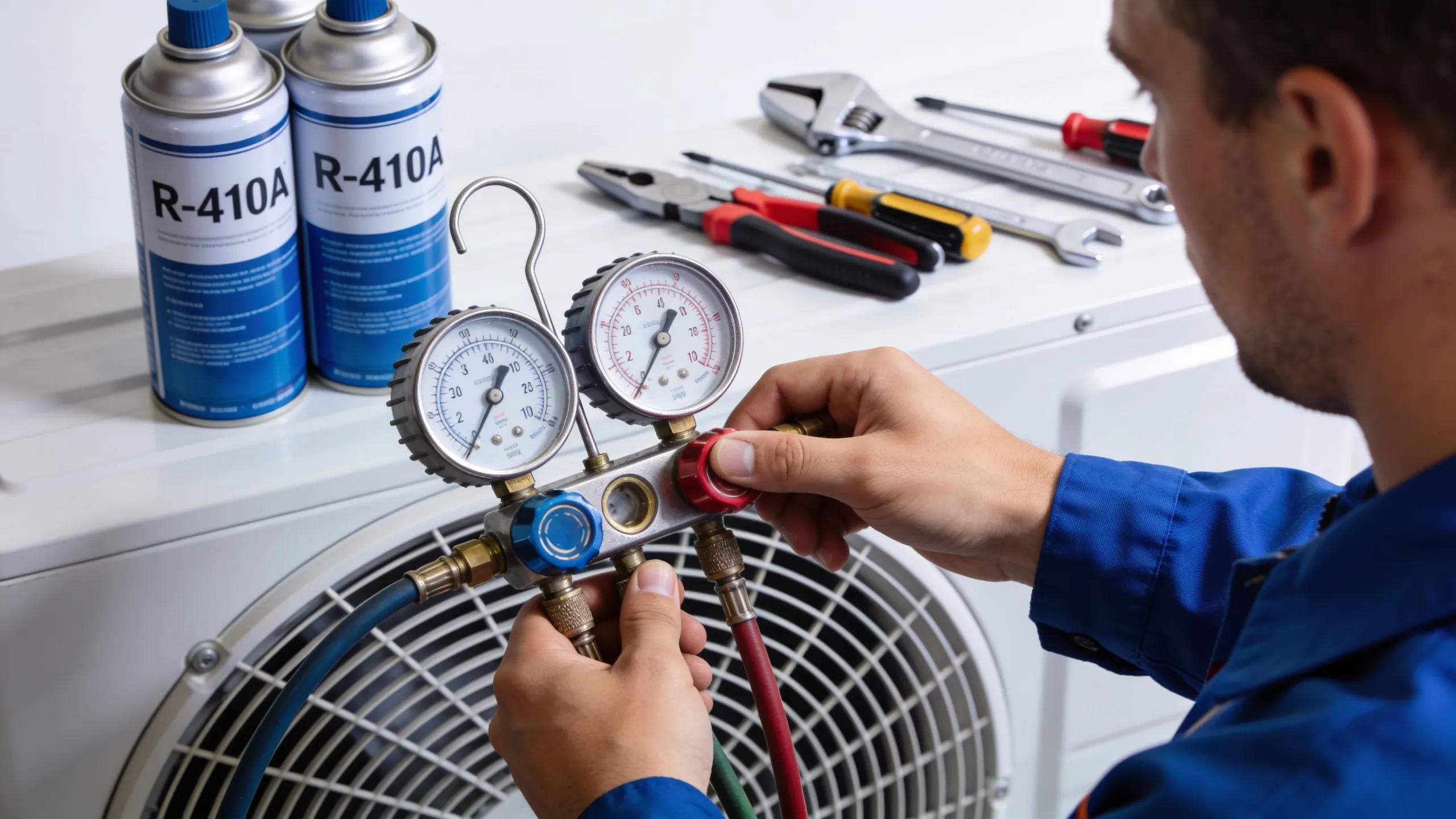
Checking refrigerant keeps the AC cooling as designed. Technicians measure pressures and levels because low or high refrigerant can cause weak cooling or damage. They also use leak detection and check superheat and subcooling to judge overall refrigerant health.
- Using Gauge Manifolds to Measure Pressures: This involves connecting specialized tools to accurately assess the pressure levels, enabling technicians to identify abnormalities.
- Significance of Electronic Leak Detection: Technicians often employ advanced methods to pinpoint refrigerant leaks, ensuring systems operate efficiently and preventing harmful substances from entering the atmosphere.
- Calculating Superheat and Subcooling: By evaluating these metrics, technicians can determine whether the AC unit is cooling effectively, indicating the overall health of the refrigerant system.
After refrigerant checks, we test airflow since blocked or weak airflow cuts cooling and increases energy use. For full service of the whole system, see air conditioning service that covers all the needed areas.
SECTION 4 – Airflow Assessment
Airflow tests show how well air moves through your home and how that affects comfort. Technicians measure the temperature difference between return and supply air, inspect ducts for blockages or leaks, and check fan speed and condition. Fixing airflow problems improves comfort and helps the system last longer.
- Temperature Split Measurements: Checking the difference between return air and supply air temperatures helps technicians assess whether the system is functioning within its designed parameters.
- Identifying Duct Obstructions: Technicians inspect ductwork for any blockages or leaks that may restrict airflow and affect cooling efficiency.
- Evaluating Fan Performance: Ensuring that fans are operating at the correct speed and without obstruction is key for maintaining effective airflow.
A full airflow check points to issues to fix before the final performance test. For homes with complex zoning needs, ductless HVAC can be a flexible option.
SECTION 5 – System Performance Test
The final performance test confirms the unit runs correctly after repairs and checks. Technicians verify cycling, record performance data, and explain findings. This step ensures the system meets expectations before the job is finished.
- Verifying Correct Cycling: Technicians check that the system cycles on and off appropriately, indicating it is functioning efficiently.
- Documentation of Findings: Keeping a record of findings ensures that both technicians and homeowners understand the condition of the system and any necessary repairs.
- Communicating Results to Homeowners: It’s important for technicians to explain their conclusions to homeowners, emphasizing any issues discovered and recommended actions.
The final test and report help homeowners see what was done and why. For complex multi-zone control, you may also look into VRF systems.
Perfection Contracting serves Morris County, New Jersey. Our technicians follow these diagnostic steps to find the real problem and deliver reliable repairs for all air conditioning units.
The table shows common refrigerant pressures and the symptoms that point to low or high refrigerant so you can recognise issues more easily.
Knowing the diagnostic steps helps homeowners spot real problems and avoid short-term fixes. When you choose Perfection Contracting, our team works to keep your AC reliable, comfortable, and cost-effective.
Frequently Asked Questions
1. How can I tell if my air conditioning system needs servicing?
From our experience, signs include uneven cooling, strange noises, odd smells, higher energy bills, frequent on/off cycling, weak airflow, or moisture around the unit. If you see any of these, contact a licensed HVAC technician for a proper check.
2. What tools do technicians use during the AC diagnostic process?
Technicians use multimeters for electrical checks, manifold gauges for refrigerant pressure, infrared thermometers for temperature readings, leak detectors for refrigerant, and airflow meters for duct checks. These tools help pinpoint the exact issue.
3. How often should I have my AC unit serviced?
Have your AC serviced at least once a year, ideally before summer. Routine service lowers the chance of breakdowns and helps the system last longer. If you use the system a lot or your home is dusty, plan for extra checks.
4. What factors influence the cooling efficiency of my HVAC system?
Cooling depends on correct refrigerant level, clean filters, clear ducts, working electrical parts, the unit’s age, home insulation, and sun exposure. Any of these can reduce performance if not addressed.
5. Can I perform any AC diagnostics myself?
You can change or clean filters and check thermostat settings. Avoid electrical work or refrigerant handling — those need a licensed technician to stay safe and prevent damage.
6. What is the role of refrigerant in an AC system?
Refrigerant moves heat from inside the home to the outside. Low refrigerant causes weak cooling and extra stress on the compressor; too much refrigerant can also harm the system. Regular checks keep levels correct.
7. What should I expect after an HVAC technician completes a diagnostic service?
After diagnostics, the technician will give a clear report with findings, recommended repairs, and performance data. They will explain what needs doing, answer your questions, and advise on simple maintenance steps.
Conclusion
Knowing the AC diagnostic steps helps you spot problems early and get repairs that last. The steps—visual inspections, electrical checks, refrigerant assessments, airflow tests, and performance testing—show how technicians make systems reliable. Our team at Perfection Contracting can help with diagnostics and maintenance; contact us to schedule service.
Related Services
- Cooling Services
- Air Conditioning Repair
- Air Conditioning Installation
- Air Conditioning Maintenance Service
- Ductless Mini-Splits
Keep Reading
Browse all HVAC tips and guides.
Need a technician? Perfection Contracting serves homeowners across Sussex County, NJ and the surrounding North Jersey service area.